
Pipeline girth weld testing refers to the systematic examination of circumferential welds that join sections of pipelines. This process is designed to assess the structural adequacy and detect possible defects to help maintain the integrity of pipeline systems. Inspection is conducted using recognized technical methods and detection technologies that aim to identify imperfections such as cracks, lack of fusion, porosity, or inclusions that could compromise safety or performance over time.
During both new pipeline construction and ongoing maintenance, dedicated girth weld testing is frequently required by industry standards. Inspection activities may be performed at various stages: after welding, prior to service operation, and during scheduled maintenance intervals. The primary objective is to limit the risk of pipeline failure by ensuring that each weld meets established quality criteria before the pipeline carries fluids or gases under pressure.
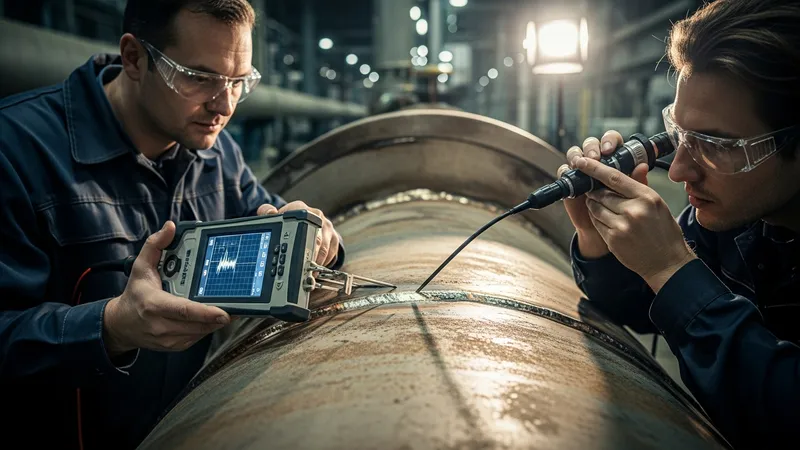
Ultrasonic testing is valued in the industry because it typically provides immediate feedback and quantitative data about flaw dimensions and locations. This makes UT useful for real-time decision-making during pipeline assembly or repair. There are also several modes of UT, such as phased array and time-of-flight diffraction, which can improve detection resolution under certain circumstances.
Radiographic testing remains a well-established technique, especially for welds with possible internal porosity or inclusions that may not be detected easily by other means. Careful radiation safety procedures must be observed, and interpretation of radiographic images requires trained personnel to distinguish between relevant and irrelevant indications.
Magnetic particle inspection is typically used to augment other methods or for quick evaluation of the surface area after cleaning. This approach can rapidly reveal surface cracks resulting from weld cooling or mechanical stress, especially in carbon steel pipeline materials. MPI provides visual evidence but is generally not suitable for non-ferromagnetic materials.
Standards for girth weld testing have evolved to accommodate greater accuracy and consistency. International guidelines, such as those set by the American Society for Nondestructive Testing (ASNT) or the American Petroleum Institute (API), outline the minimum requirements and recommended practices for girth weld inspections. Adoption of advanced detection techniques continues to increase as operators seek improved diagnostic reliability.
In summary, pipeline girth weld testing leverages qualified inspection methods to detect imperfections and promote pipeline safety. The following sections will further explore specific components, technologies, and factors that are central to this process.
Pipeline girth weld testing commonly involves a set of techniques, each suited to particular defect types and operational scenarios. Ultrasonic testing is often favored for its capacity to measure wall thickness and identify planar imperfections. By using transducers, ultrasonic methods send sound waves through the weld and analyze reflected signals to estimate discontinuity characteristics. This electronic readout can support efficient evaluation, especially in automated field operations.
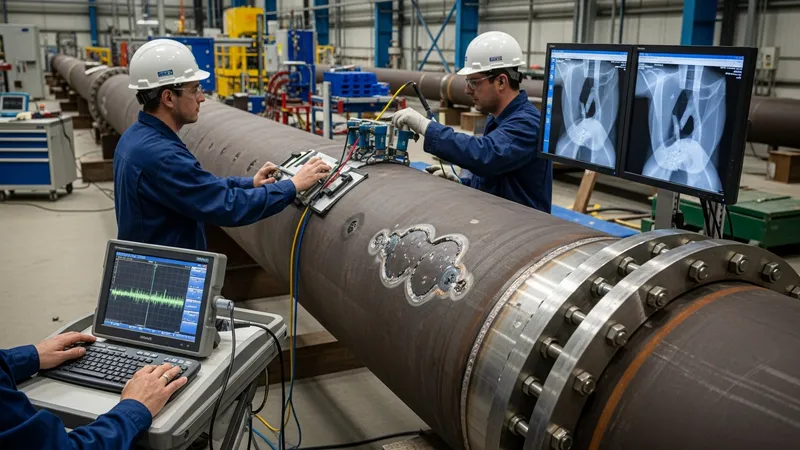
Radiographic testing may be selected when volumetric flaws, such as gas pockets or slag, are of primary concern. The resulting images provide a permanent visual record, which may assist in post-inspection assessments or independent reviews. When using radiography, both X-ray and gamma ray sources could be selected depending on weld thickness, accessibility, and local safety protocols.
Another widely adopted method is magnetic particle inspection. Applied mainly to accessible external surfaces, MPI enables rapid surveys for surface-breaking cracks that might extend longitudinally or transversely along the weld. The inspection requires appropriate magnetic fields and typically uses fluorescent or visible particles to highlight any discontinuities present in the weld area.
Each of these inspection methods can be used independently or in combination, depending on quality requirements and material type. The adaptability of these methods allows operators to tailor their inspection approach according to project complexity, operational constraints, and established industry codes. Future pages will investigate technology selection and data interpretation practices.
Pipeline girth weld testing technologies have evolved to offer higher precision and efficiency. Advancements in ultrasonic testing include phased array systems, which use multiple elements to direct sound beams at various angles, increasing the probability of detecting complex flaws. Automation and computerized image reconstruction may further enhance detection, allowing results to be visualized in real time and reducing subjectivity in interpretation.
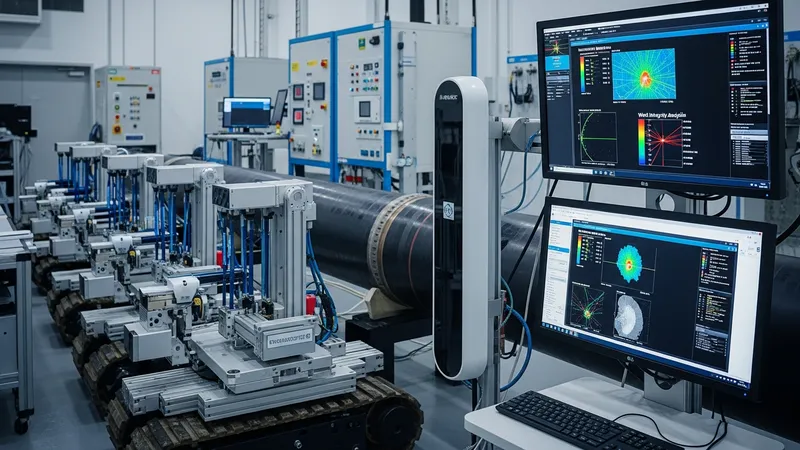
Modern radiographic testing has integrated digital detectors that replace traditional film. Digital radiography provides instant imaging, minimized radiation exposure times, and streamlined archiving. Improvements in image processing may help clarify subtle defect patterns, contributing to more accurate assessment of weld integrity. Regulatory acceptance of digital records is increasingly common in compliance documentation.
Magnetic particle inspection systems have also improved, with portable handheld units and high-sensitivity magnetic powders now available for diverse site conditions. Enhanced lighting conditions and digital photography support quicker documentation and review of MPI results, especially in large pipeline projects where traceability of findings is important for recordkeeping and traceability.
The selection of advanced testing technologies typically considers factors such as pipeline diameter, material properties, environmental conditions, and logistics. As these technologies become widely available, adoption rates may increase, particularly in projects that prioritize efficiency, comprehensive documentation, and repeatable accuracy in weld inspection results.
Interpreting the data gathered during pipeline girth weld testing is a specialized task. Personnel must distinguish between relevant and non-relevant indications according to established acceptance criteria found in technical codes or project specifications. This interpretation process typically requires formal training and certification for both accuracy and regulatory compliance.
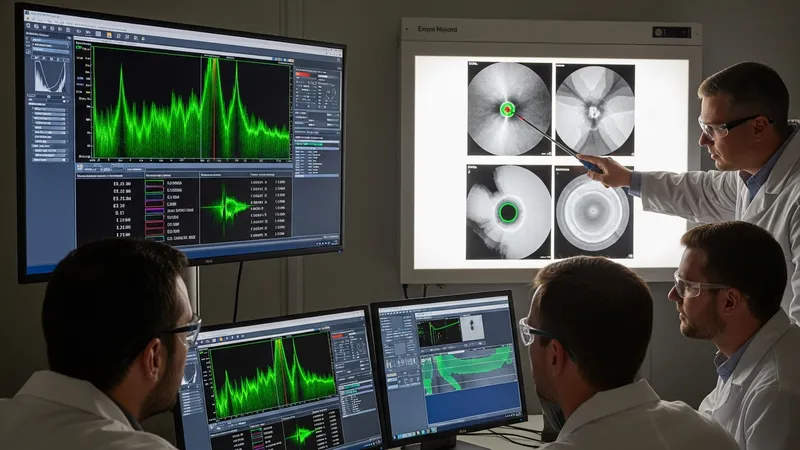
For ultrasonic testing, software-generated readings provide metrics such as flaw size, orientation, and distance from weld centerline. Analysts use these data points to classify imperfections and determine if further investigation or repairs are warranted. For radiographic images, inspectors look for variations in density, which suggest the presence and potential severity of subsurface flaws within the weld structure.
Reporting protocols generally require detailed documentation of inspection results. This may include raw datasets, annotated images, technician certifications, and written conformance statements. Standard formats make it easier for asset owners, regulators, and auditors to verify compliance and review inspection histories when necessary.
Technological tools continue to support data management by integrating inspection results into maintenance systems and digital asset registries. This consolidation can aid in planning preventive maintenance, tracking long-term weld performance, and responding efficiently to regulatory inquiries into pipeline safety and reliability.
Maintaining high standards for pipeline girth weld testing depends on robust quality assurance measures. Procedures are often defined by a combination of legal regulations, industry benchmarks, and client requirements. Audits, periodic calibrations of equipment, and technician qualification checks may form an important part of effective quality management systems focused on pipeline integrity.
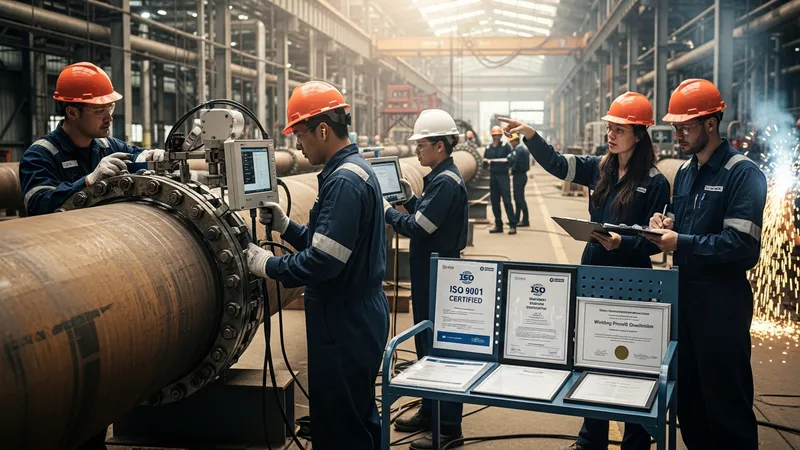
Third-party verification is sometimes involved to provide independent evaluation of weld quality and inspection practices. This layer of oversight can increase confidence in the accuracy of test results and compliance with industry standards. Relevant certifications for both personnel and equipment are widely accepted practices in quality assurance frameworks.
Documentation is a significant aspect of the compliance process. Comprehensive records covering test methods, calibrations, results, and interpretations are maintained for possible regulatory review and operational transparency. These records are also valuable for maintaining a consistent approach throughout the pipeline asset’s operational lifespan.
Continuous improvement is often observed in pipeline girth weld testing programs. New technologies and evolving practices are reviewed and, where appropriate, incorporated to address emerging challenges. This ongoing adaptation reflects the importance of maintaining pipeline safety and the critical role that thorough weld testing plays in infrastructure management.