
On-premise accounting software refers to financial management applications that an organization installs and operates on its own servers and IT infrastructure. These systems typically include ledgers, accounts payable and receivable processing, payroll interfaces, tax reporting utilities, and user permission controls. By residing within an organization’s network, on-premise software can allow direct administrative access to data stores, local backup strategies, and integration with internal systems such as inventory or manufacturing databases.
Deployment of on-premise financial systems often involves dedicated installation, configuration to match chart of accounts and business rules, and ongoing maintenance by internal IT staff or contracted services. Updates and patches are applied under the organization’s control, and implementations may require database management, network configuration, and periodic audits to maintain data integrity. Organizations may choose on-premise approaches when they need specific customizations or when local data control is a priority.
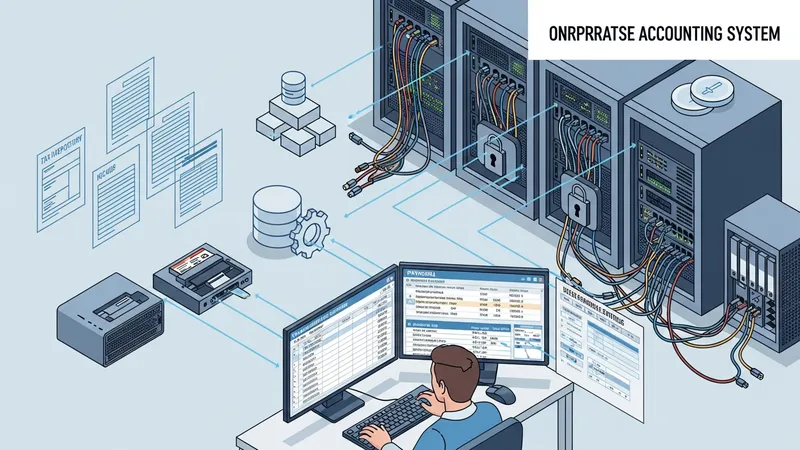
Functional coverage in on-premise accounting systems typically spans transaction capture, general ledger processing, accounts payable and receivable, fixed assets, and period-end closing functions. Many systems provide configurable workflows for approvals and role-based access control that can be mapped to internal policies. Financial reporting engines within these products may support statutory reporting formats and offer data export capabilities for external audit and tax filing tools. The architecture often emphasizes permanence of data ownership and the ability to host sensitive records behind an organization’s firewall.
Customization is a frequent consideration: on-premise deployments often allow deeper modification of forms, transaction validation rules, and report templates compared with some hosted alternatives. Custom code and integrations are commonly implemented to connect to manufacturing, point-of-sale, or CRM systems. That flexibility typically requires a governance process for change control, testing environments, and version management, because local modifications can affect upgrade paths and vendor-supplied patches.
Security and compliance aspects may vary by organization size and sector. On-premise setups can permit use of existing security controls such as internal firewalls, directory services for authentication, and localized encryption standards. From a compliance standpoint, teams often document access logs, separation of duties, and backup retention schedules to meet audit requirements. These controls can be aligned with industry standards and internal risk tolerances, though they usually demand ongoing administration and monitoring effort.
Operational lifecycle factors include initial deployment effort, routine maintenance, and capacity planning. Hardware, virtualization, or containerization choices influence performance and scalability; organizations typically forecast transaction volumes and reporting loads when sizing systems. Maintenance tasks often cover patching database engines, applying vendor updates, and performing regular backups. Organizations may also schedule functional validation and reconciliation procedures to confirm transactional integrity across integrated systems.
In summary, on-premise accounting systems provide a locally hosted approach to core financial processes with scope for customization, direct data control, and alignment with internal IT practices. Organizations considering this model often weigh trade-offs among control, maintenance effort, and integration needs. The next sections examine practical components and considerations in more detail.
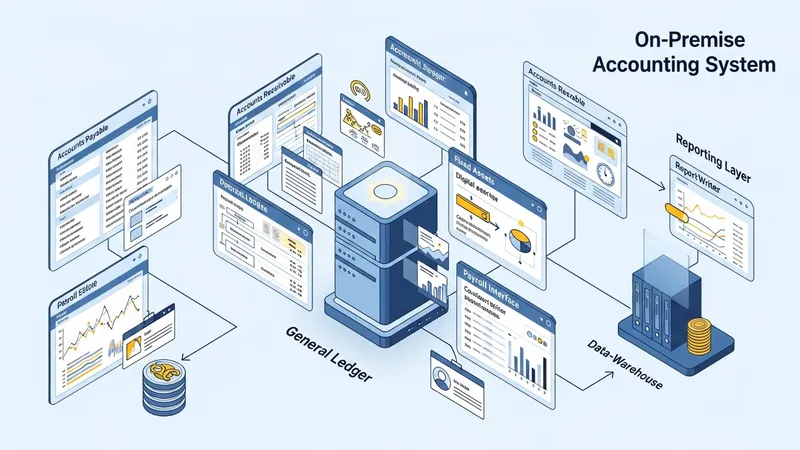
Core functional modules typically found in on-premise accounting solutions include the general ledger, accounts payable, accounts receivable, fixed assets, and payroll interfaces. The general ledger serves as the central repository for journal entries, period closings, and consolidated financial statements. Accounts payable modules often support vendor management, invoice matching, and payment scheduling. Accounts receivable modules typically handle invoicing, cash application, and aging analysis. Fixed-asset modules usually include depreciation schedules, asset tracking, and disposal processes. Payroll interfaces commonly exchange data with HR systems to ensure consistency between personnel records and payroll runs.
Reporting modules may provide built-in financial statements and configurable report writers for custom extracts. Many on-premise systems include a reporting or business intelligence layer that pulls from the transactional database and allows creation of parameterized reports and scheduled output. Organizations may standardize report templates to meet internal and statutory requirements. Where advanced analytics are required, teams often export data to a separate data warehouse or analytics platform under internal control.
Workflow and controls modules can manage approvals, segregation of duties, and audit trails. These modules typically integrate with user directories to enforce role-based access and may provide configurable approval matrices for invoice or expense routing. Audit features often capture change history for critical records and provide timestamped logs that auditors can review. Implementers commonly document control matrices and map system roles to organizational responsibilities as part of governance.
Interface and integration modules enable connectivity with other enterprise systems such as inventory, procurement, point-of-sale, and banking interfaces. Common integration patterns include batch file transfers, database-level replication, and application programming interfaces (APIs) when available. Organizations planning integrations typically assess data mapping, reconciliation points, and error-handling procedures to maintain transactional consistency across connected systems. These considerations help reduce manual re-entry and support end-to-end process visibility.
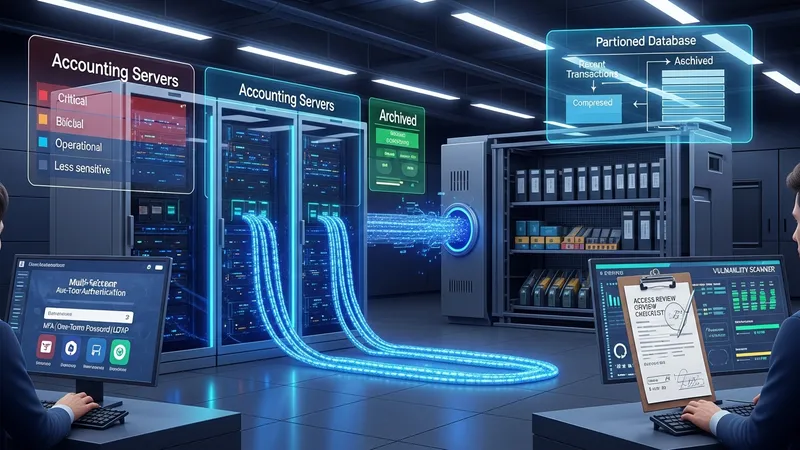
Security strategies for on-premise accounting systems often involve perimeter protections, internal network segmentation, and identity management. Organizations may place accounting servers on isolated network segments and restrict administrative access to specific roles. Authentication methods can include integration with existing directory services and multi-factor authentication for administrative accounts. Data encryption at rest and in transit may be applied where supported by the product and infrastructure. Routine tasks commonly include vulnerability scanning, patch management, and periodic access reviews to align with policy and audit expectations.
Data retention and archival policies are frequently defined to balance operational performance with regulatory obligations. Accounting teams often keep recent transactional data online for reporting and archive older periods in compressed or read-only formats. Archival approaches might use database partitioning, file-based archives, or separate archival databases managed by IT. These practices can reduce primary database size and improve query performance while preserving the ability to produce historical reports when required.
Backup and disaster recovery planning are central to data management. Typical strategies include regular full and incremental backups, offsite replication, and verified restore testing. Recovery point and recovery time objectives are often defined according to business priorities and documented in continuity plans. Some organizations implement high-availability clustering or database replicas to reduce downtime, while others maintain scheduled maintenance windows and manual failover procedures depending on resource constraints.
Access control governance should account for role assignments, temporary privileges, and separation of duties. Common controls include periodic certification of user roles, enforcing least-privilege principles, and logging administrative changes. When external consultants are involved in deployment or maintenance, organizations typically use limited-time accounts and detailed activity logging. Regular reconciliation between system users and HR records can help maintain accurate access provisioning and reduce the risk of unauthorized changes.
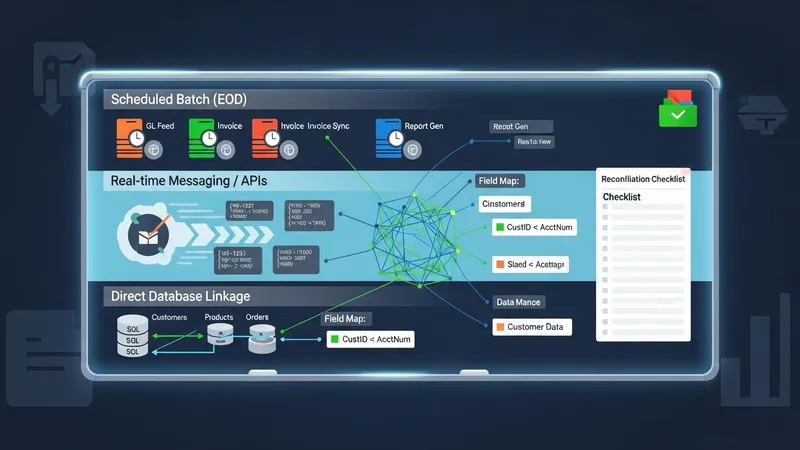
Integration with other enterprise systems often follows patterns such as scheduled batch exchanges, real-time messaging, or direct database linkage. Batch processes may be used for high-volume end-of-day transfers, while APIs can support event-driven updates where available. When planning integrations, teams commonly document data schemas, mapping rules, and reconciliation routines to detect mismatches early. Change control procedures for interfaces can reduce disruption during upgrades, since custom integration points may require revalidation after vendor patches.
Customization practices vary from configuration-only adjustments to deeper code-level modifications. Many organizations prefer configuration and scripting options provided by vendors to reduce upgrade complexity. Where code changes are necessary, teams typically maintain a development and testing environment that mirrors production and follow formal version control and testing protocols. Documentation of customizations, including purpose, technical design, and upgrade implications, is often highlighted as an important operational asset for future maintenance and audits.
Reporting strategies often distinguish between operational reports needed for day-to-day processing and statutory reports required by regulators or tax authorities. Operational reporting may focus on exceptions, aging, and cash position, while statutory reporting adheres to prescribed formats. Organizations sometimes employ separate reporting databases or extract-transform-load (ETL) processes to prepare consolidated datasets for complex reports and analytics. Scheduling, data freshness, and lineage are commonly managed to ensure reliable outputs for stakeholders.
Performance tuning frequently centers on database indexing, query optimization, and hardware provisioning. Regular maintenance tasks such as index rebuilds, statistics updates, and log management can help sustain reporting responsiveness. Scaling strategies might include vertical scaling of server resources or horizontal distribution of reporting workloads to dedicated servers. These choices typically reflect transaction volume, concurrent user counts, and reporting concurrency patterns observed in typical operational cycles.
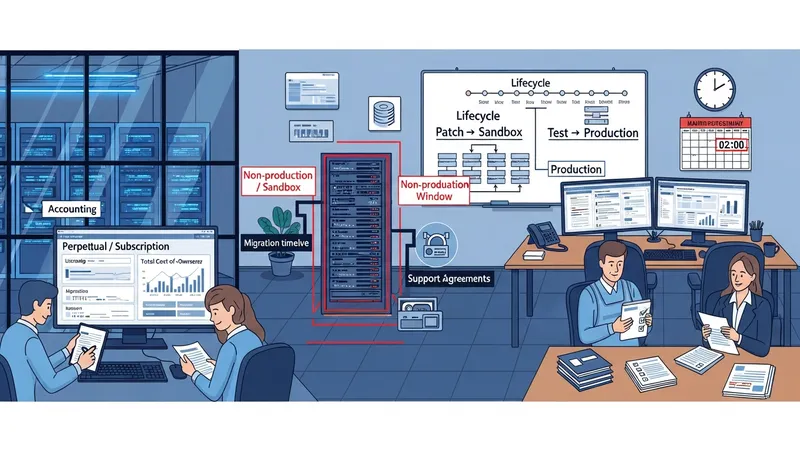
Cost components for on-premise accounting solutions commonly include software licensing, hardware or virtualization costs, implementation services, and internal or contracted administrative staff. Licensing models may be perpetual or subscription-based with maintenance fees; organizations often budget for periodic upgrades and support contracts. Implementation costs typically cover configuration, data migration, integration work, and testing. Organizations may compare anticipated total cost of ownership over several years when planning between on-premise and alternative deployment models.
Maintenance planning includes scheduled patching, vendor updates, and lifecycle management of both software and supporting infrastructure. Organizations often maintain a non-production sandbox for testing vendor patches and customizations before rolling them into production. Regular operational tasks can include reconciliation routines, month-end closings, and audit preparation. Clear maintenance windows and communication processes can help minimize disruption to finance and operational teams during update activities.
Governance structures for on-premise financial systems commonly involve cross-functional committees representing finance, IT, and audit functions. These groups may set policy for change management, access provisioning, and data retention. They often define criteria for approving customizations, integrations, and third-party connectors. Periodic reviews of system configuration, roles, and controls can help ensure alignment with evolving regulatory requirements and internal risk tolerances.
Operational continuity considerations include staffing for support, training for new features, and documented runbooks for common procedures. Organizations typically maintain documentation covering configuration, integrations, backup procedures, and recovery steps to reduce time-to-repair when incidents occur. Periodic tabletop exercises or restore tests are often used to validate recovery assumptions and ensure that teams remain familiar with critical procedures. These practices help maintain reliable financial operations under normal and contingency conditions.