
In many business-to-business sales organizations, software agents driven by machine learning and rule-based automation handle routine outreach tasks and early-stage prospect evaluation. These systems ingest contact and firmographic data, apply scoring rules or predictive models, and trigger sequences such as email cadences or task creation in a customer relationship management (CRM) system. Their role is often to streamline repetitive work that a sales development representative (SDR) would otherwise perform manually, while preserving human oversight for high-value interactions and complex negotiations.
Typical implementations combine data enrichment, lead scoring, workflow automation, and messaging templates. In United States B2B contexts, these agents often integrate with widely used CRMs and marketing platforms to synchronize contact status, note activity, and update pipeline stages. They may use natural language processing to draft or personalize messages and can route qualified leads to human sellers based on configurable thresholds. The systems are usually administered by sales operations or revenue enablement teams so they align with existing sales processes and compliance rules.

Lead scoring and qualification are core functions that these tools may perform. Scoring rules can combine explicit signals, such as firm size or job title, with behavioral signals like email opens, website visits, or content downloads. Predictive models trained on historical conversion data may supplement rule-based scoring to prioritize outreach. In U.S. B2B environments, organizations often calibrate thresholds so that higher-scoring prospects are assigned to account executives, while lower-scoring contacts enter nurture workflows managed by automation.
Integration with CRM systems and data hygiene processes is a common operational concern. Automated agents typically push contact updates, activity logs, and sequence outcomes back into CRMs such as Salesforce or HubSpot CRM used by many U.S. firms. Data enrichment services may append company information or contact details, which can improve targeting but also requires regular reconciliation to prevent duplicates and stale records. Sales operations teams often define conventions for deduplication and field mapping to keep automated actions consistent with existing pipelines.
Outreach sequencing and personalization may combine template-based messages with dynamic tokens and conditional branches. Agents can schedule follow-ups based on recipient behavior, delay intervals, or time-zone rules relevant to U.S. regions. Natural language generation features may draft initial messages that a human reviews before sending, or supply suggested reply options for faster handling. Organizations commonly monitor open, reply, and conversion rates to adjust sequence timing and message content in measured iterations rather than large-scale changes.
Compliance and data privacy are important considerations for deployment within the United States. Automated outreach must observe federal laws such as CAN-SPAM for commercial email and may need to account for state-level privacy rules like the California Consumer Privacy Act (CCPA) where applicable. Teams often maintain opt-out lists and implement consent checks within workflows; logging and retention policies are typically defined to support audits and legal requirements. Vendors may provide controls for suppression lists and data minimization to help organizations align with these obligations.
Overall, these automation tools may increase outreach scale and consistency while allowing human sellers to focus on qualified engagements. Trade-offs commonly include the need for careful data governance, ongoing calibration of scoring models, and alignment between sales and marketing processes. The next sections examine practical components and considerations in more detail.
Automated sales agents often fall into component categories that together support a lead-generation workflow. Common categories in U.S. B2B settings include engagement platforms that manage sequences, predictive lead-scoring modules that rank prospects, enrichment services that supply firmographic and contact data, and CRM connectors that synchronize status and activity. Each component may be provided by a single vendor or assembled from multiple specialized providers. Organizations typically evaluate how these components interoperate, the quality of connectors for U.S.-centric CRMs, and whether vendor data sources cover relevant U.S. industries and company sizes.
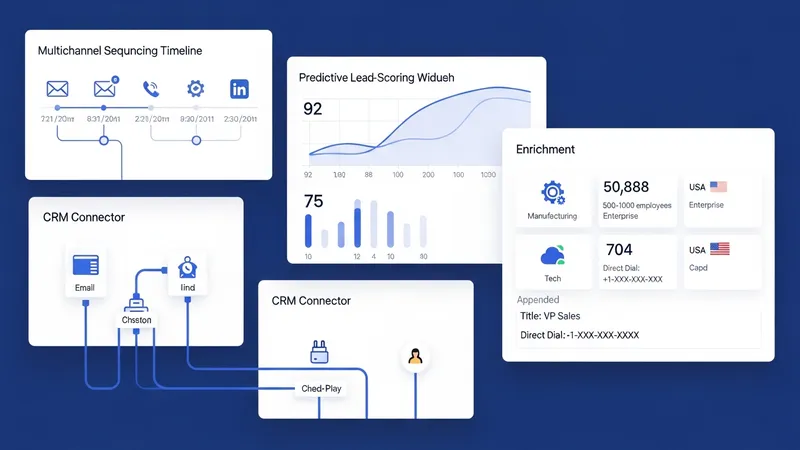
Engagement platforms may offer multichannel sequencing (email, phone, social) and analytics on response behavior. Predictive scoring modules can use regression or machine learning models trained on historical conversion outcomes from U.S. sales pipelines; model performance often varies by industry and dataset size. Enrichment services commonly pull from U.S. business registries and proprietary contact databases to append missing fields. CRM connectors must map fields and activity types into standard objects used in U.S. sales operations, and teams frequently test mapping on a sample dataset before full deployment.
Some vendors package automation with workflow builders that nontechnical staff can modify, while others expose APIs for deeper integration with proprietary systems. In the United States, IT and sales operations groups may require SOC 2 or similar attestations from vendors handling customer data. Where custom logic is needed—such as territory-based routing across U.S. regions—API-based architectures may be preferred because they allow tailored rules and logging. Consideration of vendor roadmaps and API maturity often figures into procurement discussions.
Choosing which component mix to use may depend on factors like sales team size, average deal value, and the complexity of account segmentation common in U.S. markets. Smaller teams may favor bundled suites to reduce integration overhead, while enterprise teams often select best-of-breed modules that interoperate via standardized APIs. Throughout, teams commonly document acceptance criteria, data flows, and monitoring expectations to ensure predictable behavior after go-live.
Data quality and integrations are foundational for automated lead workflows. In U.S. B2B contexts, enrichment sources often supply industry codes, headcount ranges, and executive contact details that inform scoring and routing. Automated agents typically rely on frequent synchronization with CRMs like Salesforce or HubSpot to reflect outreach outcomes and avoid duplicate efforts. Implementing full-field mapping, consistent timestamp conventions, and conflict-resolution rules reduces errors. Teams often run pilot syncs on limited records to validate transformations before scaling to the entire contact base.
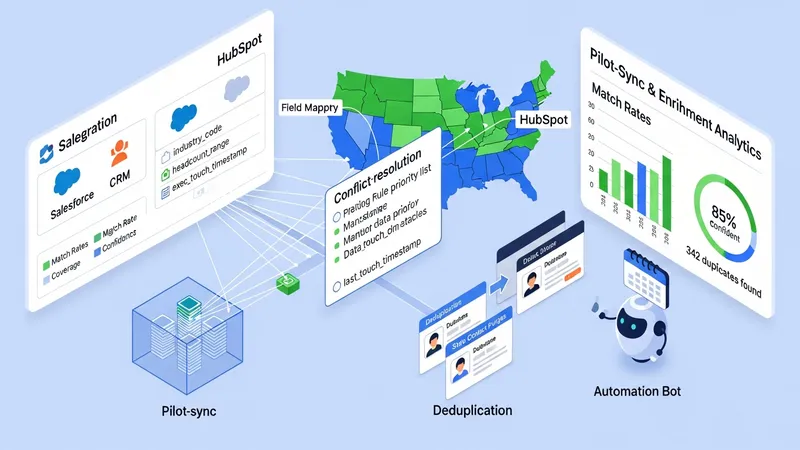
Data enrichment can improve targeting but may introduce accuracy trade-offs; third-party datasets vary in coverage across U.S. states and industry verticals. Organizations often track enrichment source attribution to assess which providers contribute the most useful signals for conversion. Regular de-duplication routines and stale-contact purges are typically scheduled to keep automation from re-engaging unreachable contacts. Reporting on match rates, enrichment confidence, and duplicate counts helps stakeholders prioritize data-improvement efforts over time.
Synchronization strategies commonly include near-real-time webhooks for activity logging and periodic batch updates for heavier fields. Webhooks may push engagement events from the automation platform into the CRM so account owners see replies or outreach attempts immediately. Rate limits and API quotas—often specified by U.S.-based vendors—can influence how frequently systems update and may require queuing or backoff strategies. Documenting API limits and expected latencies helps sales operations design reliable workflows.
Security and access control are typical operational considerations in U.S. deployments. Role-based permissions, audit logging, and encryption-in-transit are commonly required controls. Many organizations require vendors to support single sign-on and to provide exportable logs for compliance reviews. Defining retention policies for engagement records and establishing clear ownership for data stewardship are practical steps to reduce operational risk while maintaining automated lead-generation efficiency.
Evaluating automated lead workflows typically involves a mix of activity metrics and outcome metrics tailored to U.S. sales cycles. Activity metrics may include sequence send rates, open and reply percentages, and task completion rates. Outcome metrics often track conversion rates from initial contact to qualified lead and further to closed opportunity. Because U.S. B2B purchase cycles can be lengthy, teams usually examine lead velocity and pipeline progression over multiple quarters to assess the long-term influence of automation.

Experimentation frameworks such as controlled A/B tests or phased rollouts are commonly used to validate changes. Teams in the United States may run tests at the rep or territory level to compare manual workflows against automated sequences while monitoring metrics like qualified lead rate and sales-accepted lead percentages. Statistical significance and sample-size considerations are often documented before drawing conclusions to avoid reacting to short-term variance in engagement rates.
Attribution can be challenging when multiple touchpoints contribute to pipeline outcomes. Many U.S. organizations adopt multi-touch attribution models or use CRM opportunity histories to assign fractional credit across channels. Reporting that links sequence events to downstream pipeline stages—while accounting for lead aging and seasonality—typically provides a clearer view of automation impact. Dashboards that combine raw engagement data with CRM conversion paths are commonly used by sales operations and revenue leadership.
Operational monitoring often includes alerts for anomalous behavior, such as sudden drops in reply rates or high bounce volumes, which may indicate deliverability or data issues. Regular reviews of suppression lists, sender reputation, and template performance are practical maintenance tasks. Over time, teams may refine scoring thresholds and sequence cadences using observed conversion patterns rather than relying solely on initial assumptions.
Cost components for automated sales agents in the United States typically include per-user or per-seat licensing, data enrichment fees, integration and implementation costs, and ongoing maintenance. Per-user pricing may range from modest tiers for small teams to higher enterprise bands with additional analytics or API access. Data enrichment is often charged per-record or per-month and can materially affect total cost of ownership. Teams commonly budget for initial configuration, change management, and periodic model retraining when predictive scoring is used.
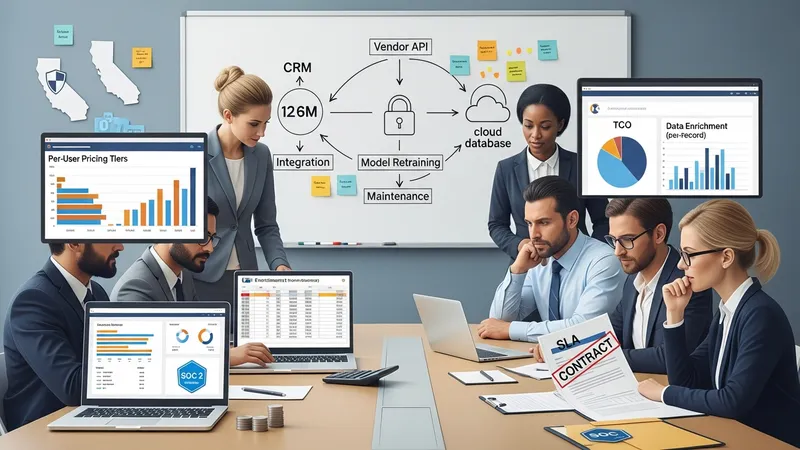
Vendor selection considerations commonly include API maturity, security certifications, and references from similar U.S. industries. Organizations often evaluate vendor contracts for support SLAs, data ownership terms, and export capabilities. Procurement may request SOC 2 reports or similar attestations to satisfy internal security reviews. Where vendor platforms will handle large volumes of U.S. contact data, teams may negotiate terms around data retention and deletion to align with corporate policy and applicable state privacy regulations.
Deployment trade-offs often center on ease of use versus customization. Packaged suites can reduce initial integration effort, while modular, API-first vendors may support more precise business logic but require engineering resources. U.S. teams frequently pilot implementations with a single sales pod or vertical to validate integration and measurement approaches before wider rollout. Documenting success criteria, rollback plans, and monitoring thresholds helps manage risk during expansion.
Ongoing governance and operational load are practical considerations: automation may reduce manual tasks but introduces needs for model calibration, template management, and suppression list upkeep. Establishing clear ownership—often within sales operations and revenue enablement—supports sustainable operation. Periodic reviews that link costs to measured conversion outcomes help U.S. teams decide when to scale, adjust, or consolidate vendors based on observed performance and budgetary constraints.