
Dental implant treatment pricing reflects multiple technical and administrative elements that combine to form a per-patient cost. At a basic level, the pricing structure often separates diagnostic work, surgical placement of the implant fixture, restorative components, and any preparatory or adjunctive procedures. Each stage can require distinct materials, equipment, and professional time, and those inputs may vary with clinical complexity. Describing the concept in this way helps explain why quotes for similar procedures can differ substantially among providers and settings without asserting a single universal fee.
Costs may also be influenced by the sequence and timing of care: preoperative imaging, treatment planning, staged bone or soft-tissue management, and the number of visits needed for healing and restorative work. Administrative overhead, such as sterilization, lab coordination, and practice staffing, can further affect the overall charge. Understanding these component parts — rather than a single line-item price — provides a clearer view of how clinical and non-clinical factors interact in forming a treatment estimate.
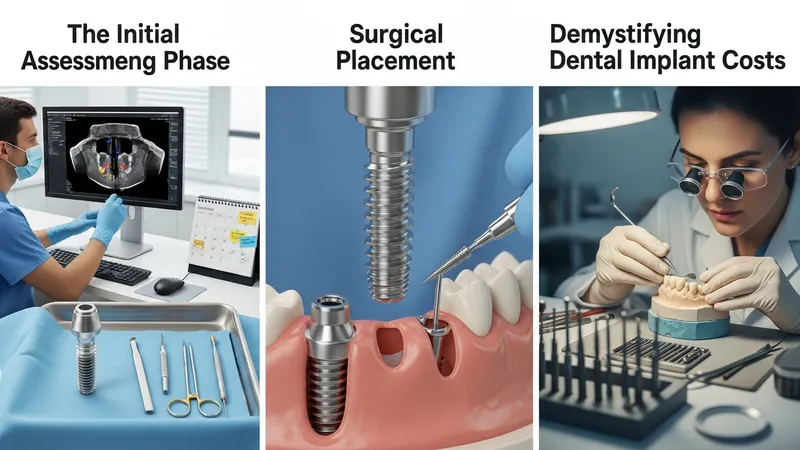
When comparing implant components, the fixture is only one of several cost-driving items. The choice of abutment material (for example, stock versus custom abutments) and crown material (porcelain fused to metal, full ceramic, or layered restorations) may change laboratory fees and fabrication time. Digital workflows that include intraoral scanning and CAD/CAM milling can shift costs between in-house procedure time and external lab billing. These distinctions often explain variability between quotes that otherwise appear similar.
Pre-treatment diagnostic steps commonly include clinical exams and imaging such as 2D radiographs or 3D cone-beam computed tomography; these diagnostics may be billed separately or bundled. The presence of prior restorations, residual root fragments, or compromised bone quality can necessitate additional procedures. Providers may outline staged plans that spread treatment across months; consequently, the timeline itself affects how services and materials are scheduled and priced over the course of care.
Laboratory and technician involvement typically form a substantial portion of the restorative fee. Custom prosthetics require laboratory time for modeling, milling, and finishing, which can vary by material and complexity. In some workflows, outsourcing to a dental laboratory increases turnaround time but may reduce upfront equipment costs for the clinic. Alternatively, clinics using in-office milling systems may show different fee structures that reflect capital investment amortization rather than external lab charges.
Practice-level factors such as clinician experience, facility costs, and regional supply pricing also contribute. Specialists or providers with additional training may bill differently than general practitioners due to longer procedure times or advanced training, while overhead such as rentals, staffing, and compliance with sterilization standards typically appears in the overall fee schedule. Considering these interacting elements helps contextualize why two practices can present divergent estimates for comparable clinical plans.
In summary, implant treatment pricing is an aggregate of diagnostic steps, surgical and restorative components, laboratory involvement, and practice-level overhead. Each element may vary in cost depending on clinical needs, material choices, and workflow preferences. Reviewing the component parts rather than focusing on a single number can clarify where differences arise. The next sections examine practical components and considerations in more detail.
Initial clinical assessment often sets the foundation for subsequent cost considerations. A comprehensive evaluation may include medical and dental histories, soft-tissue assessment, periodontal status, and occlusal analysis. Imaging choices range from periapical radiographs to three-dimensional cone-beam computed tomography; more advanced imaging can provide detailed anatomic information but may add to the diagnostic portion of the bill. Clinicians commonly use the diagnostic findings to estimate whether preparatory steps such as extractions or tissue management are necessary, which may increase the overall treatment sequence and associated fees.
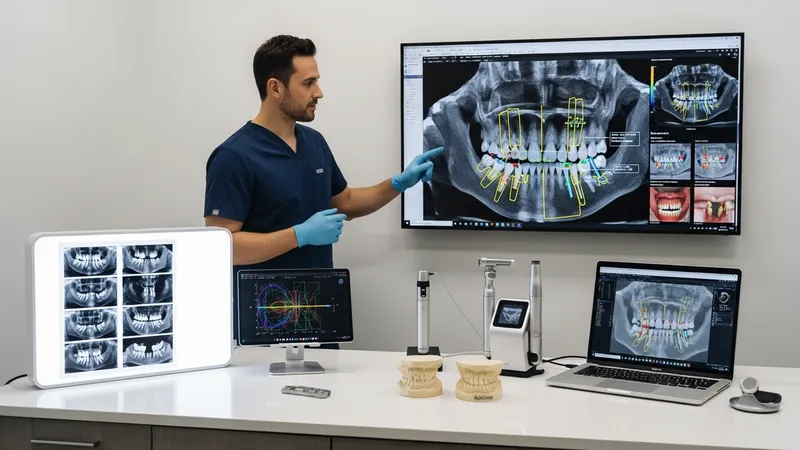
Diagnostic models and digital planning tools may be used to simulate implant positioning; such planning can reduce intraoperative variability but may represent an additional line item. In complex cases, a multidisciplinary conference — involving oral surgeons, periodontists, and prosthodontists — could be part of preoperative planning and affect scheduling and cost allocation. These planning activities often aim to reduce later complications, though they may increase upfront diagnostic expenses.
Bone quality and quantity commonly influence decisions about grafting, sinus augmentation, or staged approaches. Sites with inadequate bone often require additive procedures that extend healing time and require additional materials. Clinicians may reference widely used classification systems for bone quality to inform choices, which can affect the projected number of visits, anesthesia needs, and implant selection. These clinical determinants typically play a predictable role in how a treatment estimate is structured.
Practical considerations relevant to patients include the expected number of visits and potential for ancillary appointments such as laboratory adjustments or temporization. Providers may outline alternative sequencing options, each with different implications for time and cost. Viewing the diagnostic phase as a planning investment may help clarify why early-stage expenses can influence downstream efficiency and pricing.
Materials used for implant fixtures, abutments, and crowns can vary in composition and manufacturing process, and those differences often affect pricing. Common implant fixtures are typically made from titanium or titanium alloys, while full ceramic fixtures and zirconia components are alternatives in certain cases. Abutments can be prefabricated stock pieces or custom-milled components, and crowns may range from layered ceramics to monolithic zirconia. Each material choice may influence durability expectations, esthetic outcomes, laboratory time, and thus the restorative portion of the fee.
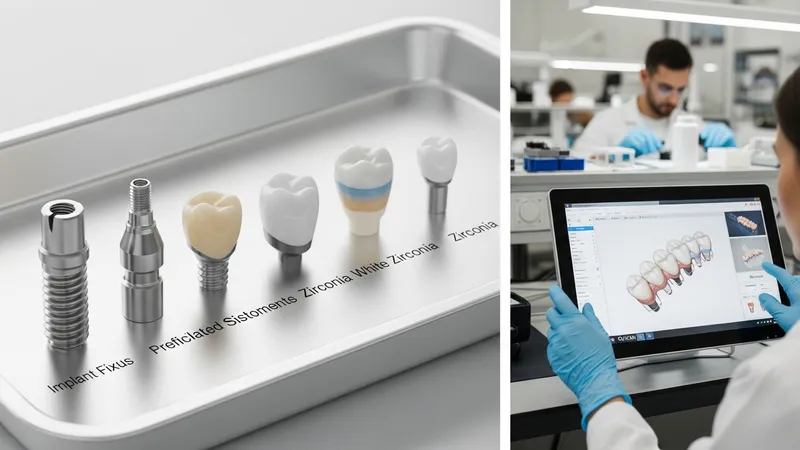
Laboratory involvement contributes significantly to restorative pricing. Custom prosthetics require model fabrication, digital design, milling, sintering, and staining or glazing steps performed by dental technicians. Complex occlusal schemes or multi-unit restorations require additional adjustments and verification steps that may be reflected as separate lab charges. Where digital workflows are employed, the cost distribution can shift: clinics may absorb scanning and design time while reducing external lab invoicing, or they may outsource design and milling, creating discrete lab fees on the patient estimate.
Temporary restorations during osseointegration also have cost implications. Provisionals may be fabricated chairside or by a laboratory; their material and workmanship level can affect the restorative plan and associated charges. Clinicians frequently communicate anticipated provisional phases as part of a staged estimate, noting that provisionalization can protect function and esthetics while affecting total treatment costs across appointments rather than as a single restorative line item.
Quality control and warranty-type policies for laboratory work may influence perceived value, though these are contractual rather than clinical guarantees. When comparing material pathways, it is often informative to consider both upfront material fees and longer-term servicing or maintenance implications. These comparative factors can help explain why similar restorative outcomes may be achieved through different material and lab routes that vary in cost structure.
Surgical factors commonly affecting pricing include the difficulty of access, the number of implants placed, and whether the case requires staged surgeries. Adjunctive procedures such as bone grafting, ridge augmentation, or sinus elevation often add separate surgical steps and increase required healing intervals. Immediate placement at the time of extraction may reduce the number of surgeries but can add technical demands; conversely, delayed placement often requires additional appointments and interim restorations. These variations in surgical approach typically influence both professional fees and material use.
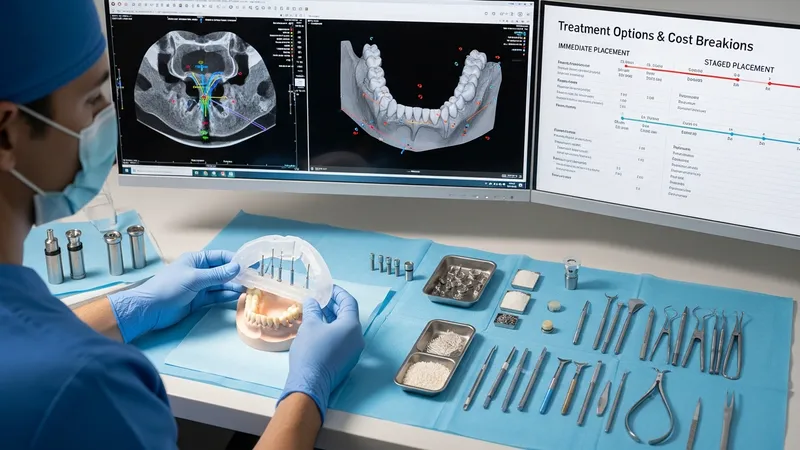
Anatomic considerations such as proximity to vital structures, compromised ridge morphology, or prior infection history can necessitate additional imaging, referral to specialist colleagues, or use of advanced surgical guides. Guided surgery using computer-aided templates can enhance placement precision and may reduce chair time for some clinicians; however, producing guides involves digital planning and manufacturing steps that may appear as separate costs. Such procedural choices usually reflect trade-offs between planning investment and intraoperative efficiency.
Healing timelines affect scheduling and temporary prosthetic needs. Sites requiring extended osseointegration periods may need interim solutions for function and esthetics, which can increase the number of prosthetic appointments and provisional fees. Similarly, staged grafting procedures typically extend treatment duration and may involve multiple graft materials or membrane products, each with associated costs that compound across appointments rather than appearing as a single charge.
Patient-specific clinical risk factors, such as systemic health or smoking status, may influence surgical planning and perioperative management. While these factors do not directly set price, they often lead clinicians to adopt more conservative or additional supportive measures that can alter the resource allocation and scheduling. Presenting these considerations as part of a treatment plan helps explain variability in surgical-related pricing.
Provider training, specialty certification, and case volume typically inform practice fee structures. Clinicians with advanced surgical training or subspecialty focus often manage more complex cases and may allocate longer appointment times, which can affect professional charges. Practice overhead — including clinic facility costs, staff salaries, infection-control protocols, and equipment maintenance — also contributes to how fees are determined. These practice-level factors are commonly reflected in the structure of an estimate rather than as a single clinical justification.
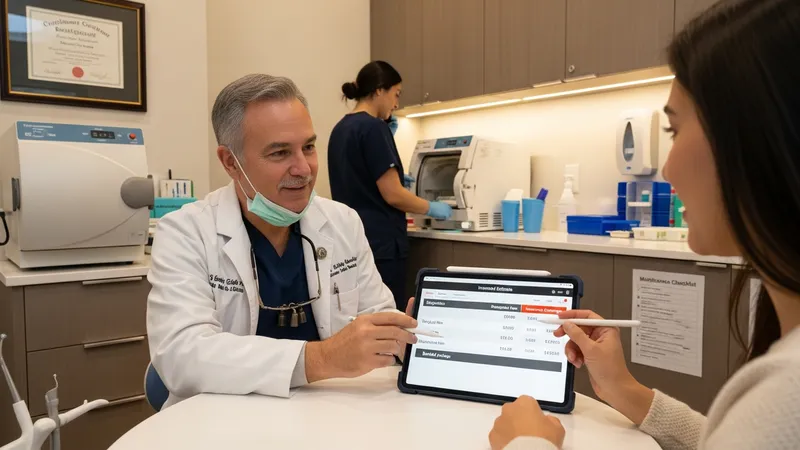
Billing models vary: some practices present itemized estimates separating diagnostics, surgical fees, and restorative fees, while others provide bundled packages. Insurance coverage for implant-related care differs by policy and jurisdiction; in many systems, prosthetic or surgical portions may be partially covered while adjunctive procedures are handled differently. Patients often find it informative to review plan details and ask for an itemized explanation to understand which elements may be subject to coverage or reimbursement.
Financing arrangements and payment sequencing may be available in some settings as administrative options rather than clinical recommendations. Descriptions of payment options are administrative in nature and should be treated as neutral facts about how charges can be scheduled. Considering the scheduling of restorative steps and the timing of lab fees can help patients anticipate when specific charges are likely to appear during the course of care.
In evaluating estimates, it can be helpful to request a breakdown of component costs and expected timelines for each phase of treatment. Comparing itemized plans across providers may clarify where differences arise — for example, in implant system selection, lab fees, or the inclusion of adjunctive procedures. These comparisons are informational and may assist in understanding how clinical, material, and practice-level factors combine to form the total treatment pricing.