
Artificial intelligence (AI) in gaming refers to the application of computational techniques that enable games to simulate intelligent behaviors and interactions. This includes the creation of responsive non-player characters (NPCs), procedural content generation, and adaptive systems that adjust gameplay based on player actions. AI integration has been a progressing area within game development as it contributes to creating more dynamic and engaging experiences. In particular, AI systems might interpret player behavior and modify in-game challenges or narratives to align with the player’s style and skill level without manual adjustments by developers.
In the context of AI implementations, various algorithms and machine learning methods are used to inform decision-making within games. These technologies are often embedded in game engines or auxiliary software frameworks and can influence areas such as pathfinding, decision trees, and environmental changes. Developers may employ AI to introduce variability in gameplay, avoiding repetitive scenarios and enhancing realism. The inclusion of AI-driven mechanics can also affect the game design philosophy by shifting some aspects of experience customization from fixed scripting to emergent properties that arise from player interactions.
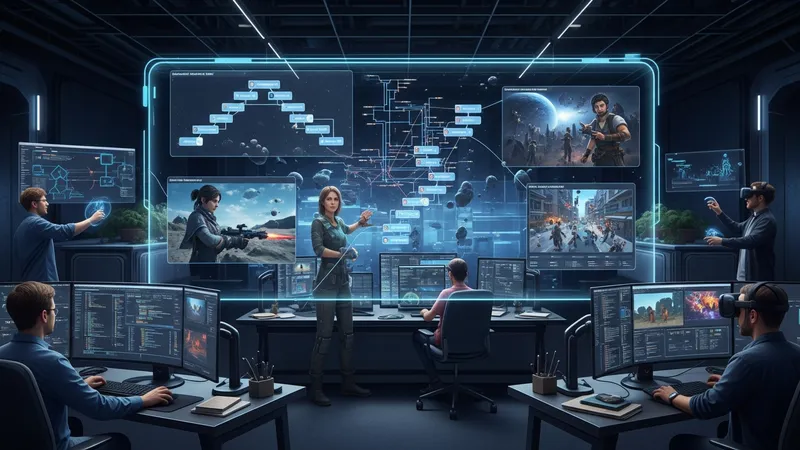
AI's role in creating smarter NPCs often involves automating decision-making processes that were historically rule-based. Instead of predictable patterns, NPCs can learn from interactions or state changes to provide varied reactions. This variability may increase immersion by simulating human-like unpredictability. It can also support more complex multiplayer settings where NPCs need to interact dynamically with several human players simultaneously without manual scripting for every possible scenario.
Adaptive difficulty is another application of AI that can adjust game challenge based on ongoing player performance. Systems may monitor metrics such as success rates, time spent on levels, or frequency of failures, and tweak parameters accordingly. This aims to maintain balanced gameplay that neither frustrates nor bores players. Although not all games employ such systems, this approach may become more common as machine learning tools become more accessible to developers and allow real-time computation within game environments.
Dynamic environment generation powered by AI may include procedurally creating map layouts, placing objects, or altering game states based on player behavior or random seeds. This method can offer fresh content with each playthrough and reduce the resource requirements for manual content creation. Dynamic changes might also tie into narrative progression or player choices, resulting in games that feel tailored yet non-repetitive. However, designing such systems requires careful balancing to avoid unintended gameplay issues or loss of thematic consistency.
Incorporating AI also expands analytical capabilities within game development workflows. Data collected from player interactions can be processed using AI to identify patterns, optimize level design, or detect potential issues. This feedback may influence future updates or new titles. Although these practices are in use by some studios in the United States, their extent varies depending on development resources and project scope.
Overall, AI integration within game design involves numerous methods and technologies that contribute to more responsive, engaging, and varied player experiences. These applications span NPC behavior, difficulty scaling, procedural content generation, and data-driven development processes. The next sections examine practical components and considerations in more detail.
Game developers often utilize a range of AI techniques to deliver intelligent game elements. Among common methods, finite state machines (FSMs) provide a structured way to define NPC states and transitions, which remain foundational in many projects. More advanced approaches include behavior trees, which allow for hierarchical decision processes and more nuanced character actions. Additionally, machine learning techniques such as reinforcement learning may be employed for NPCs that learn from environment interactions over time.
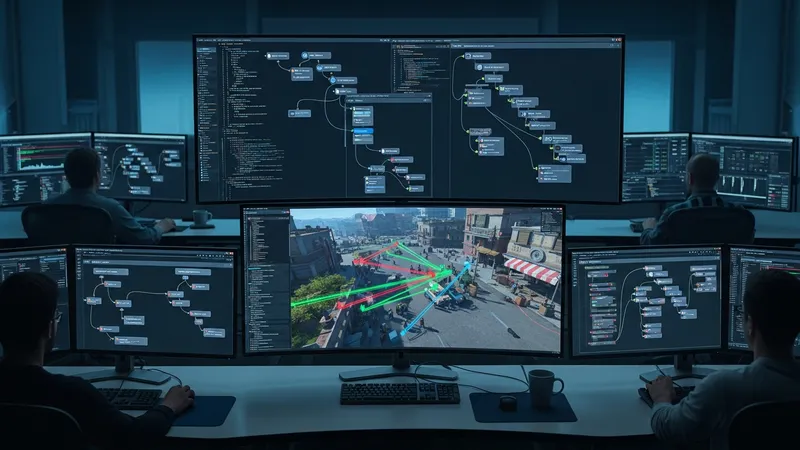
Pathfinding algorithms are critical AI components primarily used to navigate game worlds efficiently. The A* algorithm is frequently implemented due to its balance of computational efficiency and path optimality. In larger United States-based game studios, pathfinding is often integrated with navigation meshes that approximate walkable terrains, improving reliability across complex environments. These systems are continuously refined to handle dynamic obstacles and changing level layouts.
Natural language processing (NLP) algorithms can be applied for dynamically generating or interpreting in-game dialogue. While more experimental, some titles incorporate models that create contextually relevant responses to player input, facilitating deeper interaction with NPCs. This area is less widespread but may grow as language models develop further, potentially enhancing storytelling components within games.
The use of procedural content generation (PCG) methods involves AI algorithms that automatically create game assets such as levels, items, or textures. PCG can reduce manual workload and provide variability. It typically uses rule-based systems, noise functions like Perlin noise, or generative adversarial networks (GANs) to produce content. Within the United States, some indie and large studios experiment with these techniques to extend replayability and player engagement, although integration varies significantly by project type.
Non-player characters often serve as key interactable entities within games and benefit considerably from AI-driven enhancements. Intelligent NPCs may employ learning algorithms to adjust their tactics or strategies according to player actions, leading to varied encounters. For example, in combat scenarios within popular United States-developed titles, AI-controlled enemies might coordinate or alter aggression based on player positioning, increasing gameplay complexity without explicit scripting for every possibility.
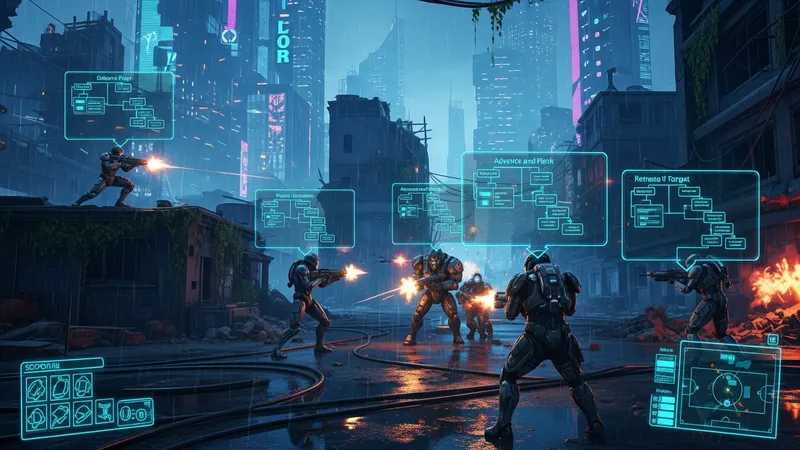
Behavior trees are commonly used to design NPC decision-making processes due to their modularity and interpretability. This structure allows developers to define discrete behavior tasks and their order of execution, contributing to nuanced actions such as searching, attacking, or retreating. Many AI systems in the industry apply this design pattern to maintain manageable and scalable character AI, particularly in expansive open-world games.
Adaptive NPC behavior may also involve learning player preferences through data analysis, allowing NPCs to anticipate player choices or utilize player history to provide tailored interactions. While not universally deployed, this approach could be seen in some titles that attempt to foster immersive role-playing elements by personalizing NPC responses over time. Ethical considerations regarding player data use may influence implementation within the United States regulatory framework.
In multiplayer and cooperative games, NPCs often need to behave compatibly with human players’ styles and roles. AI may help to balance NPC contributions to team-based objectives or dynamically shift roles to complement player decisions. These systems enhance cooperative play without excessive micromanagement. Incorporating such sophisticated AI functions involves iterative design and tuning to align with overall gameplay balance and enjoyment.
Adaptive difficulty systems aim to modify gameplay challenge based on player performance metrics collected during a session. These systems may analyze factors such as completion times, accuracy, or resource management effectiveness. In several United States-developed games, adaptive difficulty can result in dynamic scaling of enemy strength, puzzle complexity, or resource availability to sustain player engagement without direct input from developers during gameplay.
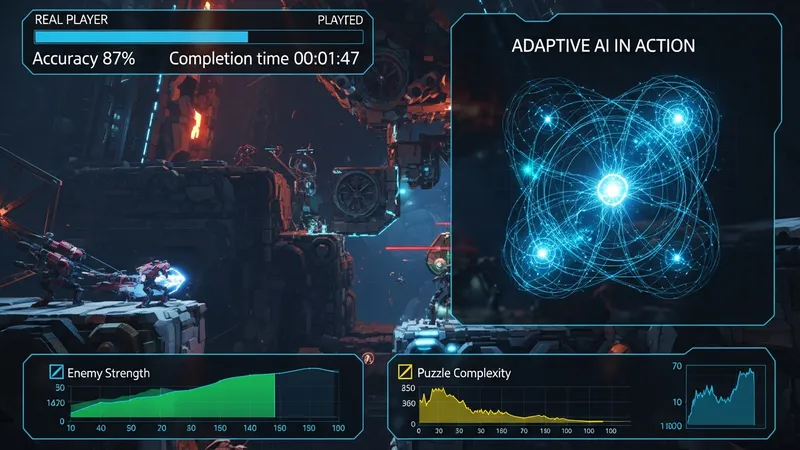
Techniques for adaptive difficulty often incorporate feedback loops where the game recalibrates challenge levels continuously or at specific intervals. AI algorithms may apply rulesets or probabilistic models to determine adjustments that avoid abrupt difficulty spikes or drops, aiming for a smooth gameplay flow. The design of these systems involves trade-offs between maintaining player interest and preventing frustration, requiring extensive testing and player analytics.
Some games integrate machine learning models that predict player skill progression and adjust future challenges accordingly. These predictive systems might use data from previous play sessions to tailor the experience for returning players. Although adoption is growing in the United States gaming market, challenges around model accuracy and processing constraints still exist, especially in real-time gameplay environments.
Adaptive difficulty may also contribute to accessibility by allowing players with different abilities to experience games at comfortable challenge levels. While not always explicitly marketed as accessibility features, these adjustments could support broader player inclusivity. Regulatory and community frameworks in the United States encourage inclusive design practices, which may indirectly influence the development of adaptive AI systems.
Dynamic world generation enabled by AI includes producing game environments, assets, or events that change in response to player interactions or procedural factors. Procedural generation techniques often utilize algorithms that automate level or item creation, providing varied gameplay across sessions. For instance, many games developed in the United States incorporate these methods to create expansive open-world maps that differ for each player, enhancing exploration and content longevity.
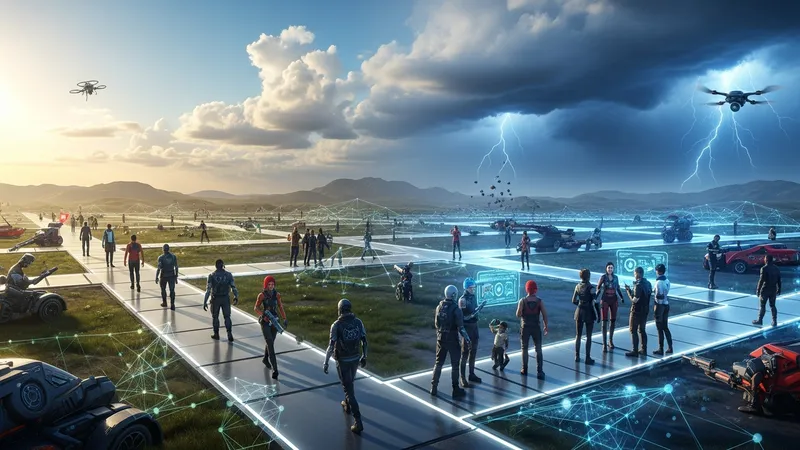
AI-driven environmental changes can respond to player progress or choices, including altering weather, lighting, or NPC placements to affect gameplay ambiance and strategy. These systems rely on rule-based AI or event-driven triggers linked to player behavior statistics. Although highly variable, their use contributes to immersive game narratives by making worlds feel alive and reactive rather than static.
Randomized content generation supported by AI may include spawning enemy encounters, loot drops, or quest objectives. These elements typically follow probabilistic models designed to maintain balance and fair play. Game designers often define parameters within which the AI operates to prevent overly frequent extreme randomness or imbalance. This approach may be particularly relevant in games designed for replayability and sandbox-style interaction common in the United States market.
Integrating AI for world and content generation requires consideration of technical constraints, including processing overhead and storage. Real-time procedural generation demands efficient algorithms to avoid negatively impacting game performance. Careful design ensures that dynamically created content aligns with overall thematic and narrative goals. As tools and engine capabilities evolve, AI contributions to content generation are expected to gradually increase in scope and sophistication.