
Germany’s long-term plan to shift electricity production toward low-carbon sources centers on adapting the national network to accommodate variable generation and new load patterns. This adaptation involves physical upgrades to high-voltage transmission corridors, reinforced distribution networks in urban and rural areas, and procedural changes so that variable sources such as wind and solar can be connected with predictable protocols. The concept also includes integrating digital monitoring, active grid management, and clearer planning timelines to coordinate different actors including transmission system operators (TSOs), distribution system operators (DSOs), project developers, and federal authorities.
Implementation typically covers regulatory updates, grid-code revisions, and investment frameworks that allocate costs and responsibilities for expansion and reinforcement. In Germany, these processes are informed by agencies and industry bodies that set connection standards, congestion management rules, and grid development plans. Measures often include targeted corridors for offshore wind, accelerated permitting for onshore reinforcements, and pilot projects that test market-based balancing and redispatch procedures. Stakeholders may see phased technical standards and regional planning that reflect varying local constraints.
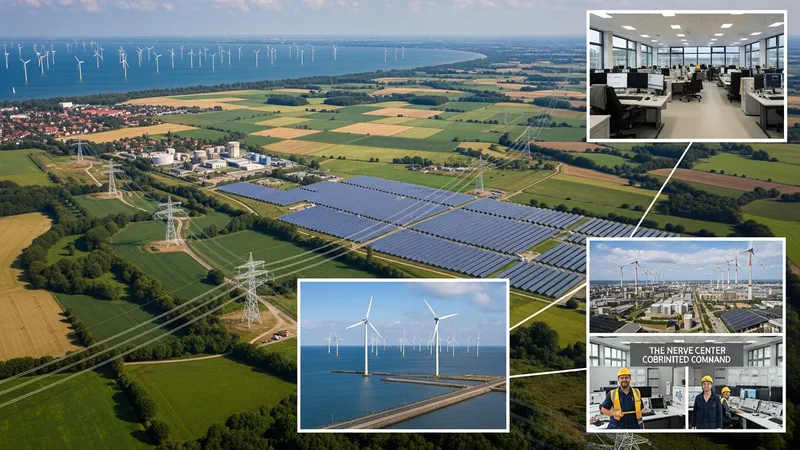
Grid reinforcement projects in Germany may follow multi-year planning cycles that include network development plans (Netzentwicklungsplan) prepared by TSOs and reviewed by the Bundesnetzagentur. These plans often highlight sections where capacity expansion or reconductoring may be required to relieve bottlenecks created by new renewable generation. Funding mechanisms can include regulated tariffs that recover investment over time; the allocation of costs between consumers, grid operators, and generators typically follows statutory rules. Planning may be phased so that urgent reinforcements proceed sooner, while less critical upgrades are scheduled later.
Technical standards for connecting renewable plants have evolved to require enhanced grid-support functions such as reactive power control, frequency response, and fault-ride-through capabilities. Germany’s grid codes may specify test requirements and certification routes for inverters and plant controllers. These technical changes aim to reduce the need for curtailment and to stabilise voltage and frequency across transmission and distribution levels. Developers and equipment manufacturers often engage with certification bodies and testing facilities within Germany to align installations with national requirements.
Market mechanisms that support flexibility can include redispatch processes, auctioned capacity for grid reserves, and evolving imbalance settlement systems. Since Germany has moved toward more coordinated redispatch rules (often described in regulatory updates), there are procedural steps that may change how TSOs procure balancing capacity and how distribution-connected resources participate. Aggregated demand-response and virtual power plant concepts may be enabled through market access rules that define bid sizes, gate times, and settlement practices under German market regulations.
Permitting and spatial planning are significant practical considerations when routing new lines or siting storage facilities. In densely populated regions, DSOs may prefer local reinforcement and grid-optimisation measures that limit new overhead corridors, while in coastal regions planners often prioritise offshore grid connections for wind power. Social acceptance, environmental assessments required under German law, and regional coordination with Länder authorities may influence timelines. Technical work typically runs concurrently with stakeholder consultations to reduce potential delays.
Overall, the conceptual framework combines physical grid upgrades, updated technical and market rules, and coordinated planning among German authorities and operators. Expected outcomes often include increased integration of variable renewables, reduced curtailment, and improved operational flexibility, while costs and timelines may vary by region and project type. The next sections examine practical components and considerations in more detail.
Modernising Germany’s grid often involves layered technology upgrades that enable monitoring, automation, and advanced control. Examples typically include wide-area measurement systems, distribution-level SCADA enhancements, and digital substations that support remote configuration. These technologies may allow TSOs and DSOs to detect congestion, perform coordinated switching, and execute dynamic network reconfiguration. German pilot programmes and research institutions, such as Fraunhofer institutes, frequently test interoperability between vendor systems to ensure that equipment installed in German networks meets national functional requirements.
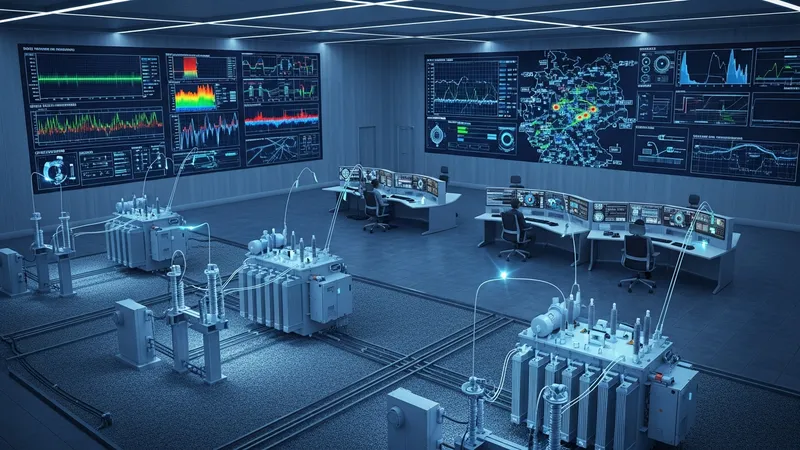
Digitalisation can also support better forecasting and market participation for renewable plants. Improved weather and generation forecasts may reduce uncertainty about wind and solar output, enabling more accurate scheduling and reduced imbalance volumes. Data exchange standards between TSOs, DSOs, and market participants are often aligned with national regulations to preserve system security. Cybersecurity and data-protection considerations are commonly addressed in technology procurements to match German legal expectations for critical infrastructure.
Grid-adjacent technologies such as power-electronics-based converters are more prominent in Germany’s transmission and distribution systems due to the large share of inverter-connected generation. These converters may provide controllable reactive power and frequency response when configured accordingly. Adapting protection schemes to accommodate converter behaviour is often necessary, and German grid code updates typically outline test and modelling requirements for new plant types to ensure stable interaction across network elements.
Investment decisions for technological upgrades typically take into account expected lifecycle costs and operational benefits. German utilities and network operators may use phased deployments and pilot projects to validate new systems before wider roll-out. Where possible, regulatory frameworks allow for cost recovery mechanisms that reflect the long-term nature of network assets, although allocations and timelines remain subject to approval by the Bundesnetzagentur and related oversight bodies.
German regulatory instruments commonly influence which projects proceed and how costs are allocated. The Renewable Energy Sources Act (EEG) and subsequent amendments shape renewable deployment incentives and market participation rules, while the Bundesnetzagentur oversees network development plans and tariff structures. Redispatch regulations and measures such as redispatch optimisation are periodically revised to integrate distributed generation and cross-border flows. Legal frameworks in Germany may also define specific timelines for permitting and environmental assessments that affect project pipeline delivery.
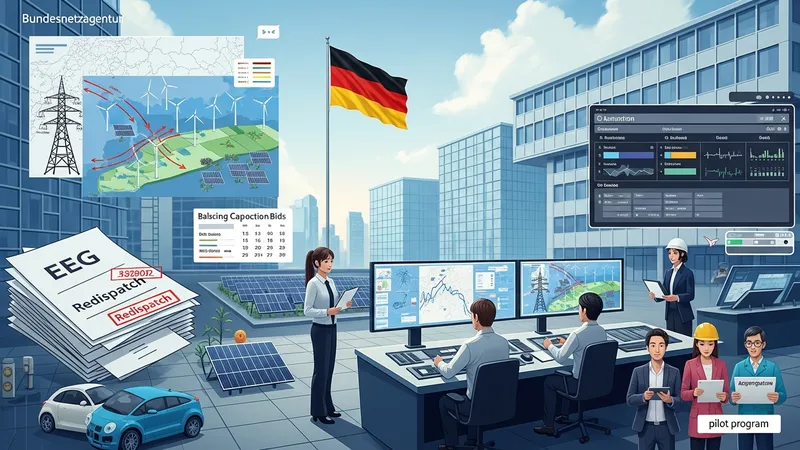
Market-based instruments designed to procure flexibility are increasingly part of German policy discussions. Auctions for balancing capacity, compensatory mechanisms for congestion relief, and tendered grid-reserve products are examples that may be used to align system needs with commercial responses. Rules for aggregators and small-scale providers to participate in these markets have been evolving under German regulatory guidance, often with pilot programmes to validate participation models and settlement procedures.
Cross-border coordination with neighbouring countries is relevant for Germany given significant electricity trading. TSOs in Germany routinely engage in capacity allocation and congestion management with EU partners; coordinated planning may be necessary for large corridors or offshore grid projects that affect multiple jurisdictions. National regulations typically map onto European rules for market coupling and cross-border balancing, and German authorities participate in these arrangements through established channels.
Public financing and targeted support mechanisms, such as loan programmes or grants, can influence the pace of grid modernisation in Germany. Institutions like KfW and federal programmes may provide frameworks for investment in specific infrastructure categories, while regulatory approvals determine cost recovery via tariffs. Stakeholders often consider these financial frameworks as part of project feasibility assessments, acknowledging that funding models interact with regulatory risk allocation.
Transmission system operators in Germany — including TenneT, Amprion, 50Hertz, and TransnetBW — produce network development plans that identify necessary high-voltage reinforcements. These plans typically review projected generation additions and demand patterns and may propose new corridors or converter stations. Regional distribution companies then coordinate local reinforcements, often aligning with the broader transmission plans to ensure that capacity is available for connecting new renewable plants. German planning processes may include public consultation phases and environmental assessments under national statutes.
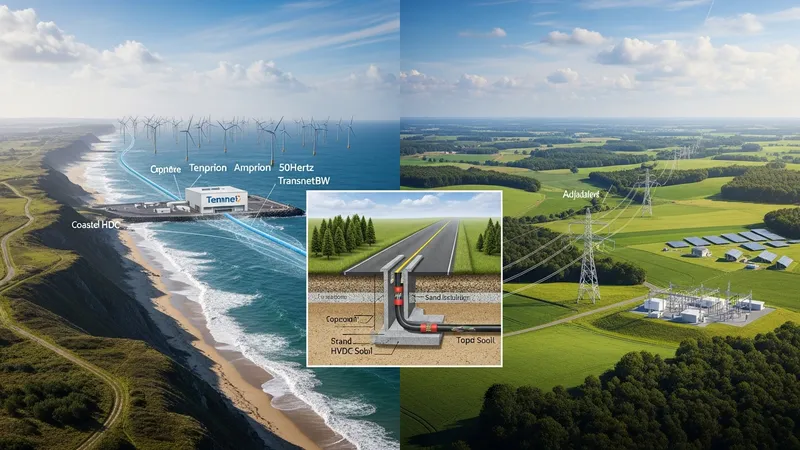
Spatial planning considerations often lead to differentiated approaches: coastal regions may prioritise maritime grid infrastructure and offshore connections, while inland regions focus on onshore reinforcements or decentralised solutions. Routing decisions take into account landscape protection, population density, and existing infrastructure. In some cases, underground cabling or reconductoring is considered to reduce visual or land-use impacts, and cost implications of such choices are typically discussed during regulatory review processes in Germany.
Distribution-level measures may emphasise non-wire alternatives where appropriate, such as targeted active network management, local storage, or flexible consumption programmes that delay or avoid expensive line upgrades. German DSOs sometimes pilot these approaches under regulatory sandboxes to test technical and market interactions. The success of such measures often depends on predictable procedural rules for network access and compensation models that reflect the avoided investment value.
Coordination between federal, state (Länder), and municipal authorities is commonly necessary to streamline permitting and siting for grid projects. Timeframes for approvals may vary by region, and stakeholder engagement processes are used to address local concerns. Planning authorities and TSOs often publish timelines and project maps so affected communities and market participants can follow proposed measures and prepare for potential impacts on local infrastructure and land use.
Storage technologies play multiple roles in Germany’s system, from short-duration batteries that provide fast frequency response to longer-duration options such as pumped hydro that can shift energy seasonally. Battery installations are increasingly used to provide local congestion relief and market participation, while larger storage assets may be deployed by market participants or network operators as part of grid-support strategies. Regulatory treatment in Germany determines whether storage participates as generation, consumption, or a distinct asset class for grid and market purposes.
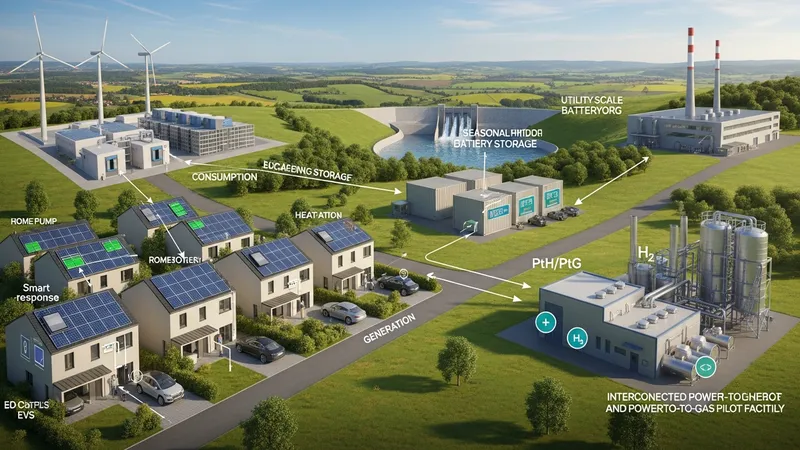
Demand-side flexibility and sector coupling—linking electricity with heating, transport, and industrial heat—are often discussed as means to absorb variable supply and reduce peak transmission needs. Examples in Germany include heat pumps with controlled operation, electric vehicle charging that responds to grid signals, and power-to-heat or power-to-gas pilots. Integration of these loads may reduce the need for some grid reinforcements if managed strategically, though coordination mechanisms and market incentives shape how widely such measures are adopted.
Aggregators and virtual power plant concepts can bring smaller assets together to offer meaningful system services under German market rules. Aggregation models may be subject to specific registration, bidding, and settlement requirements defined by market operators and regulators. Pilot programmes and test frameworks in Germany often aim to clarify the technical and commercial interfaces for aggregated resources to participate in balancing and redispatch markets.
Cost considerations for storage and flexibility projects are typically expressed in project-specific terms and may include capital costs, operational expenditures, and potential revenue streams from market participation. Public programmes or financing instruments in Germany can influence project economics, and technology-learning effects may reduce capital costs over time. Decision-makers often weigh these economic factors alongside system benefits such as reduced curtailment and enhanced local reliability when prioritising storage deployments.