
High-speed internet options encompass a range of network technologies and service plans that deliver broadband connectivity to homes and businesses. The concept involves both the physical connection method—such as fiber, cable, fixed wireless, or DSL—and the plan characteristics that affect everyday use: advertised download and upload speeds, latency, data allowances, service area coverage, and equipment requirements. Evaluating options requires understanding how these technical and contractual elements interact with typical household needs for streaming, remote work, gaming, cloud backups, and multiple concurrent users.
Key factors to consider when choosing a plan include raw throughput, network consistency, and how the provider manages traffic during busy hours. Throughput numbers often reflect peak or theoretical rates and may not match sustained speeds under load. Other elements such as latency, jitter, upload symmetry, and local infrastructure availability can influence real-world performance. Contract details, service tiers, and the presence of any data limits or extra fees are also relevant when comparing plans on a factual basis rather than on marketing claims.

Comparing technologies often begins with assessing typical speed ranges and how those speeds match household activities. For example, multiple high-definition video streams and large uploads for cloud backups often benefit from higher sustained download and upload rates. Latency-sensitive tasks such as interactive gaming or real-time collaboration may require lower latency and stable jitter metrics. The relationship between advertised maximums and measured throughput can depend on shared network segments, so measured speeds during peak usage hours may be lower than off-peak measurements.
Coverage and availability usually shape which options are practical for a given address. Urban areas may have access to multiple technologies, while rural addresses can have fewer wired options and may rely more on fixed wireless or satellite services. Infrastructure deployment typically follows investment and population density patterns, so availability can change over time as networks are upgraded. When evaluating coverage, it may be useful to consider both current service maps and reported timelines for planned network expansions in the local area.
Data allowances and fair-use policies can influence plan suitability for households with high consumption patterns. Some plans may include monthly data caps or implement traffic management after thresholds; others offer unlimited data but may still moderate speeds during congestion. Understanding how a provider measures and enforces data usage can be relevant for those who stream high-resolution video, perform frequent large uploads, or operate multiple connected devices. Billing terms for excess usage are a contractual detail to review as part of a neutral comparison.
Equipment and service-level considerations are part of the selection process as well. Providers may supply modems, gateways, or customer-premises equipment with different features such as integrated Wi-Fi, voice ports, or support for mesh extenders. Equipment rental fees and ownership options can affect long-term costs, while the quality of a local Wi-Fi setup can influence perceived internet performance within the home. Warranty, maintenance, and typical service response times may vary among providers and are relevant factual considerations rather than qualitative endorsements.
In summary, high-speed internet options involve a mix of technologies, performance metrics, coverage realities, and contract details that together determine plan suitability for specific needs. Evaluating these elements in parallel—speeds, latency, data policies, availability, and equipment—can help clarify which plans may match a household's usage profile. The next sections examine practical components and considerations in more detail.
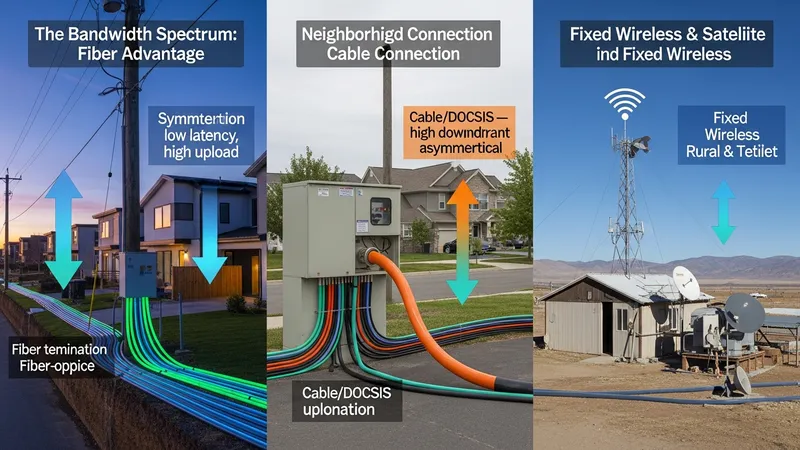
Connection types form the foundational distinction among high-speed internet options and often dictate maximum achievable speeds and typical latency profiles. Fiber-optic infrastructure generally tends to offer higher symmetrical throughput and lower latency, which may suit users who upload large files or host services. Cable systems using DOCSIS standards may provide high downstream capacity but often with asymmetrical upload rates. Fixed wireless and satellite systems can extend coverage where wired lines are limited, though they may exhibit higher latency or throughput variability due to signal conditions. Each type’s engineering characteristics should be considered in relation to the household’s use cases rather than framed as universally superior.
Deployment patterns influence practical access to each connection type. Urban and suburban areas often have denser cable and fiber footprints, while remote regions may rely on wireless or satellite links. Deployment timelines for fiber expansion can be multi-year projects in some regions, so a local address may experience phased availability. Availability maps and independent coverage reports can be consulted to determine likely options at a specific location. When comparing options, factor in both current availability and any announced infrastructure upgrades that may alter future choices.
Performance under load is another consideration tied to connection type. Technologies that share spectrum or coaxial segments among nearby customers can experience reduced throughput during peak periods due to contention. Dedicated or less-shared architectures may maintain steadier performance. For latency-sensitive applications, the physical path length and the number of network hops matter; fiber links typically reduce propagation delays compared with satellite routes. These technical differences can be assessed as part of a measured comparison aligned with household activity patterns.
Equipment compatibility and interface standards vary by connection type and can affect home networking design. For example, fiber termination may require an optical network terminal, whereas cable services use a DOCSIS-compatible modem. Fixed wireless often requires externally mounted antennas and line-of-sight considerations. Evaluating the physical installation requirements and any in-home wiring implications helps set realistic expectations for setup complexity and potential additional costs over time.
Speed commonly refers to download and upload throughput measured in megabits or gigabits per second and is a primary specification in many plans. However, actual performance also includes latency (milliseconds between packet exchanges) and jitter (variation in latency), which can affect activities like video calls and interactive applications. When reviewing plan information, look for both advertised throughput and any available median or typical speed reports that indicate daily or peak-hour performance. Understanding how a plan’s advertised figures translate into sustained use helps set practical expectations.
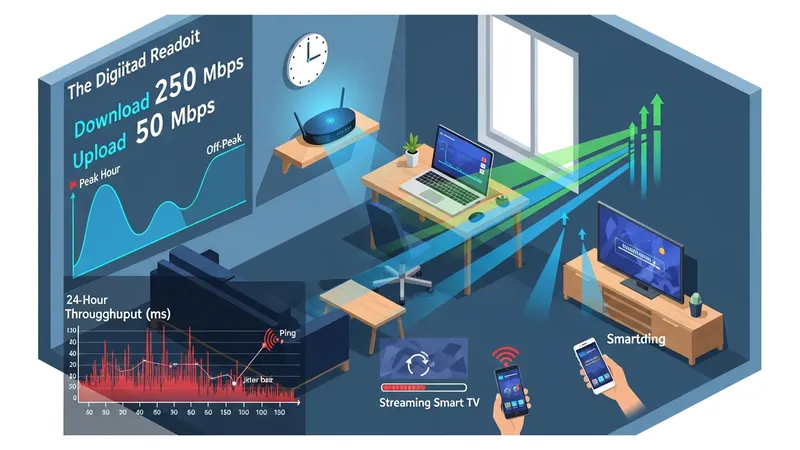
Measuring real-world performance may involve speed tests conducted at different times to capture peak and off-peak behavior. Independent measurement tools can provide an empirical view of how a connection handles simultaneous streams or uploads. Factors such as in-home Wi‑Fi configuration, device capabilities, and local network congestion can influence test results. Interpreting those measurements in context—such as by comparing to expected needs for streaming quality or remote work sessions—can be informative without implying guarantees about future performance.
Symmetry between download and upload speeds matters depending on user behavior. Households that regularly upload large files, back up to cloud storage, or host remote sessions may find more value in plans with higher upload rates. Many cable-based plans historically offer higher downstream capacity relative to upstream, while fiber deployments often provide closer parity. Evaluating symmetry alongside latency and reliability metrics yields a more complete view of how well a plan supports bidirectional tasks rather than relying solely on headline download numbers.
Network management practices can also shape performance outcomes. Providers may implement traffic shaping or prioritization rules that affect certain traffic types during congestion periods. Some plans may note explicit policies about peak-time management or usage tiers. Reviewing these operational details as part of the technical evaluation helps clarify how a plan’s measured speeds might vary under different network conditions and usage patterns.
Plan pricing structures can include a recurring service fee, potential equipment charges, and occasional one-time installation fees, with terms varying by region and provider. While financial specifics depend on local markets, it is useful to consider how monthly payments relate to the included features such as speed tier, data allowances, and added services like voice or streaming bundles. Contracts may specify promotional rates that change after an initial period, and rental fees for equipment can affect long-term cost. Reviewing the overall pricing framework helps compare plans on neutral, factual terms rather than marketing labels.

Data allowances and policies regarding usage thresholds are important factual elements to assess. Some plans specify a monthly data cap with measures for overage billing or enforced speed reductions, while others present unlimited use but retain the ability to moderate throughput during congestion. Understanding how a provider measures usage and what happens when limits are reached can prevent surprises in service behavior. For households that routinely consume large amounts of data, examining these terms is a practical part of a neutral comparison process.
Contractual commitments may include defined terms, early termination conditions, and renewal practices. Month-to-month arrangements typically offer flexibility but can come with higher month-to-month rates, while fixed-term contracts may present different initial pricing and penalties for early cancellation. Warranty and repair responsibilities for customer-premises equipment are other contractual details to review. Treating these items as factual contract terms rather than as endorsements supports an informed decision aligned with usage needs and risk tolerance.
Billing transparency and customer support responsiveness are additional considerations that can influence plan selection. Look for clear statements about billing cycles, prorated charges for installation, and how disputes are handled. Service-level expectations such as estimated repair windows and support channels may be listed in provider documentation. Evaluating these operational aspects helps form a comprehensive view of what ongoing service might entail for different plan options.
Plan features and in-home networking interplay significantly with perceived internet quality. Wireless coverage within a home depends on router placement, building materials, and device density; therefore, assessing whether a provider’s supplied gateway includes modern Wi‑Fi standards or whether separate mesh systems may be needed is relevant. Some plans bundle additional features like managed Wi‑Fi, parental controls, or security services; others leave these as optional extras. Considering which features are functionally necessary versus optional helps align expectations for the overall user experience.

Reliability metrics such as historical uptime in a region, redundancy options, and local infrastructure resilience can affect a plan’s suitability for critical uses. For scenarios that require high availability—such as remote work or home-based services—assessing whether alternatives like secondary wireless links or battery-backed gateways are practical considerations can be informative. These are not prescriptions but factual considerations that households may weigh depending on how they prioritize continuous connectivity versus cost and complexity.
Latency-sensitive applications can be affected by the provider’s routing and peering arrangements. The number of intermediary network hops and the quality of backbone connections influence round-trip times. For users concerned about real-time performance, examining independent latency reports or community feedback on routing to common services can offer insight. Such technical observations should be interpreted cautiously and in light of local network conditions rather than as definitive predictors of experience.
Maintenance, firmware update policies, and security practices are additional technical dimensions to review. Providers may push firmware updates to managed devices or require specific configurations for certain features. Understanding how updates are applied and whether customers retain administrative control of in-home equipment can factor into decisions about privacy, security, and long-term device management. Treat these operational points as factual inputs to a comprehensive comparison of plan options.