
Lead generation services describe a set of activities and systems used to identify potential customers, gather their contact information, and deliver that prospect data into sales and marketing workflows. These services typically combine audience targeting, data capture mechanisms (forms, calls, chats), and initial qualification steps so that businesses can follow up through email, phone, or automated nurturing. Providers may operate campaign infrastructure, manage creative assets, or supply verified contact lists; the common objective is to create an organized stream of prospects that aligns with a client’s sales process.
Operationally, lead generation services often involve a sequence: define target audience segments, deploy channels that reach those segments, capture responses, apply qualification rules, and integrate results into a customer relationship management (CRM) system. In many United States contexts this sequence also includes consent management and recordkeeping for regulatory purposes. The services can be delivered by in-house teams, specialist agencies, or software platforms that automate parts of the workflow, and they may emphasize different stages such as prospect discovery, short-form capture, or lead enrichment.
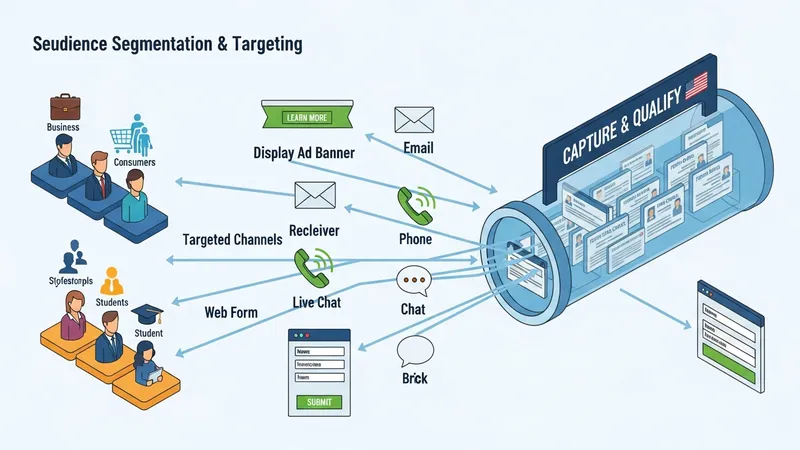
Channels and form design are central to service selection and setup. Search ads with embedded lead forms may produce intent-driven contacts, while social lead ads frequently prioritize convenience and mobile completion. Landing pages and gated content remain common capture points for inbound programs, and telephone or chat capture is still used for higher-touch inquiries. Each channel may present trade-offs in completion rate, information depth, and downstream qualification needs; practitioners often test combinations to match lead attributes with intended follow-up resources.
Data quality and enrichment are distinct components of many lead services. Raw contact captures can be supplemented with firmographic, demographic, or behavioral attributes from third-party data sources or internal matching. Enrichment may improve routing and scoring but can also introduce inaccuracies if matching rules are loose. In United States operations, enrichment workflows commonly include verification steps (email or phone validation) and timestamped consent records to support compliance reviews and to help sales teams prioritize outreach based on available context.
Integration with CRM and automation platforms is a frequent operational requirement. Lead delivery commonly uses APIs, webhook triggers, or file-based transfer into systems such as Salesforce or HubSpot, where assignment rules and nurturing sequences can be applied. Timeliness of delivery often affects conversion: leads delivered within minutes may convert more readily than those routed hours later. Integration design typically also accounts for deduplication logic and status updates that allow marketing teams to close the loop on lead outcomes.
Measurement and commercial models vary across United States providers. Pricing approaches may include flat fees, pay-per-lead, or performance-tiered arrangements; what constitutes a qualified lead is typically defined in a Service Level Agreement (SLA) or contract. Cost per lead (CPL) in U.S. markets may often range widely depending on vertical and channel—from lower amounts for consumer inquiries to substantially higher ranges for specialized B2B leads—so buyers commonly monitor conversion rates, downstream sales outcomes, and lead aging to assess relative value rather than relying on headline unit prices alone.
Lead generation services also intersect with recordkeeping and consent practices in the United States. Service providers often maintain logs of opt-ins, form submissions, and phone recordings where lawful, and they may store metadata used for audits or attribution. Because procurement teams and legal reviewers may evaluate vendor processes, many organizations ask for examples of data-handling flows and retention windows. The next sections examine practical components and considerations in more detail.
Digital search and social channels are primary sources for many U.S. lead-generation programs. Search engine ad formats with lead capture extensions can surface to users actively seeking a solution, while social lead ads may capture attention within feeds and prioritize quick completion on mobile devices. Platform-specific formats commonly used in the United States include Google Lead Form Extensions and vendor documentation for social lead ads. Landing pages, gated downloads, webinar registrations, and phone calls remain complementary formats depending on the target segment and product complexity.
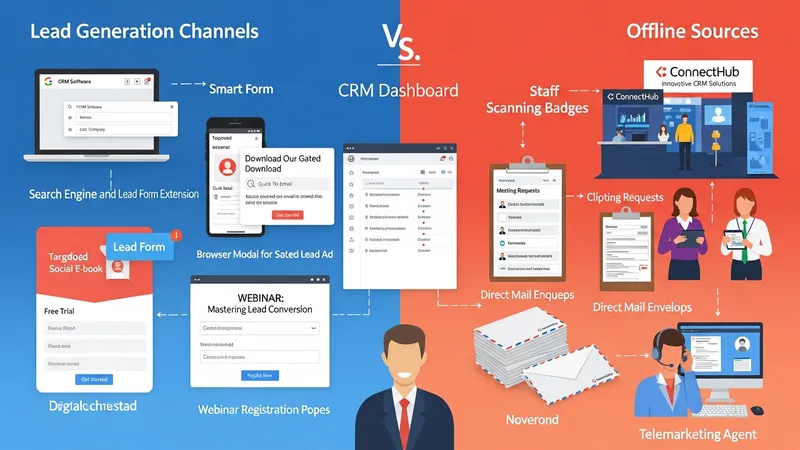
Offline channels continue to play a role in certain industry verticals. Trade shows and professional events in the United States often generate meeting requests or badge-scan lists that feed into lead workflows, and direct mail or telemarketing can still produce qualified responses for some audiences. These offline sources typically require manual verification and structured import to CRM platforms, and teams commonly treat them with different scoring rules to reflect the channel’s propensity for higher initial engagement but varying qualification depth.
Form design and required fields influence lead quality and completion rates. Short, single-field capture points may increase completion but limit qualification data; conversely, multi-field forms can improve initial screening at the cost of lower conversion. Many U.S.-based programs use progressive profiling—collecting minimal information initially and requesting additional details on follow-up interactions—to balance ease of capture with richer qualification over time. Accessibility and mobile optimization are additional considerations that can affect completion on common devices.
Channel selection typically reflects audience behavior and budget trade-offs. For example, B2B programs in the United States often include LinkedIn or industry event capture for targeted outreach, while consumer-facing programs may emphasize programmatic display and social channels for broader reach. Teams commonly pilot small tests across channel mixes, measure initial CPL and conversion rate, then reallocate spend based on observed patterns rather than assuming fixed channel performance.
Qualification frameworks transform raw captures into prioritized leads for sales follow-up. In U.S. enterprise contexts, lead scoring may combine firmographic attributes (company size, industry), behavioral signals (content downloads, page visits), and explicit form responses. Scores are often numerical thresholds used to determine routing: a lead that meets a minimum score may be assigned to an account executive, while lower-scoring leads enter nurture tracks. These models may be recalibrated periodically using closed-loop feedback from sales results to refine predictive signals.
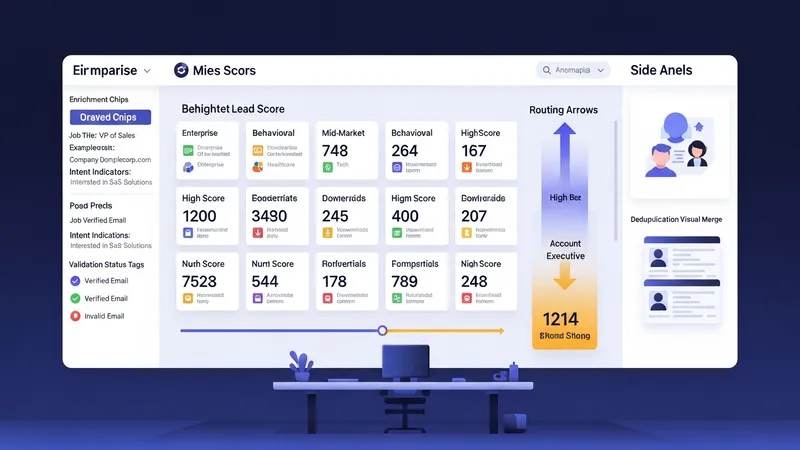
Data handling includes enrichment, validation, and deduplication routines. Enrichment services append attributes such as job title, company domain, or intent indicators, which can aid routing and segmentation. Validation routines—email syntax checks, phone-number format checks, and spam filters—are commonly applied to reduce false positives. Deduplication logic in CRM systems helps avoid repeat outreach and preserves historical context, and U.S. teams often adopt policies for merging or archiving duplicates to maintain single-lead views.
Privacy and consent records are integral to qualification workflows in U.S. operations. Capturing explicit opt-in language on forms, keeping timestamped consent logs, and storing source attribution enable marketers to demonstrate lawful basis for communications and to respect unsubscribe requests. For telephonic contacts, consent and calling-window records are frequently documented to align with federal and state rules. These practices serve both operational clarity and regulatory traceability.
Insider considerations for scoring and handling include assigning different SLA windows by lead tier and tracking lead aging metrics. For example, higher-scoring leads may be routed with a shorter response SLA, while nurtured leads may be scheduled for automated follow-up sequences. Teams often test different attribute weightings and monitor downstream conversion rates—rather than relying solely on initial submission data—to ensure the scoring system aligns with actual sales outcomes.
United States lead operations must consider federal statutes and agency guidance that affect how contacts are acquired and used. The Telephone Consumer Protection Act (TCPA) and Federal Communications Commission (FCC) guidance influence consent requirements for automated calls and texts; official information is available from the FCC. Email marketing is governed by the CAN-SPAM Act with enforcement and guidance from the Federal Trade Commission (FTC); see the FTC’s CAN-SPAM compliance page for details. These federal frameworks interact with state-level privacy laws that can add obligations for data handling and disclosures.
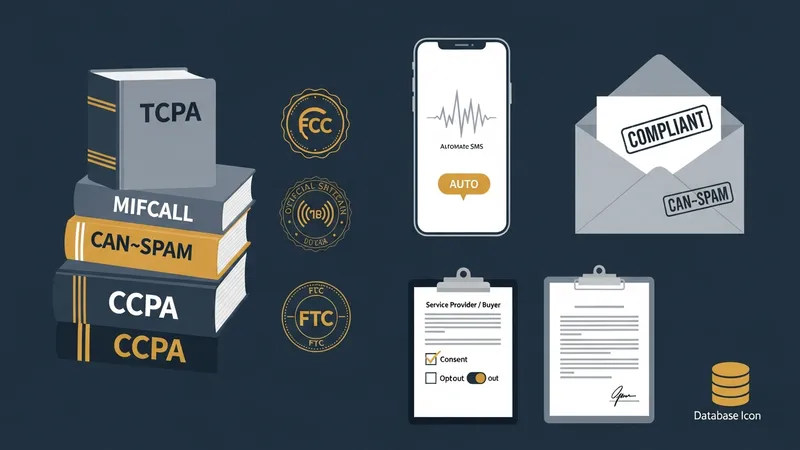
State privacy laws, such as the California Consumer Privacy Act (CCPA), can affect how consumer lead data is collected, shared, and deleted in the United States. Organizations that process personal data of California residents may need to consider disclosure obligations and opt-out mechanisms; the California Attorney General’s office provides official resources on the statute. Service providers and buyers commonly document responsibilities in contracts to clarify who holds obligations for consumer requests and data subject rights.
Recordkeeping and audit readiness are practical compliance considerations. Maintaining timestamped logs of consent, sources of data, and data processing purposes helps teams respond to inquiries or audits. In addition, many U.S. organizations include verification procedures for purchased or third-party lists to reduce exposure to stale or improperly sourced contact data. Legal teams may also request sample data flows and retention schedules during vendor evaluations to assess alignment with institutional policies.
Risk mitigation practices include limiting sensitive data capture, applying encryption for stored contact records, and implementing role-based access controls within CRM systems. While these measures do not eliminate regulatory obligations, they can reduce exposure and facilitate responses to access or deletion requests. Teams often review their vendor contracts and data protection addenda periodically to reflect evolving regulatory expectations and to document risk allocation.
Key performance indicators for lead programs commonly include lead volume, conversion rate to qualified status, cost per lead (CPL), and downstream conversion into meetings, opportunities, or revenue. In United States markets, B2B funnels frequently show longer sales cycles and lower raw lead volumes with higher per-lead handling costs, while consumer campaigns may deliver larger volumes at lower unit costs. Organizations often track multi-touch attribution to understand which channels contribute to eventual conversions rather than relying solely on first-touch metrics.
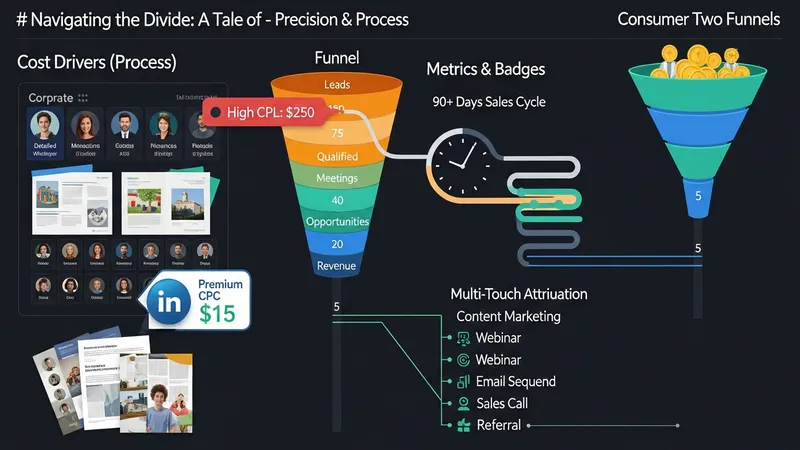
Cost drivers in U.S. lead programs include audience targeting granularity, creative development, channel bidding dynamics, and data acquisition or enrichment fees. Narrow professional-targeting on platforms like LinkedIn may carry higher advertising cost per click or lead compared with broader social placements, while specialized list rentals or third-party intent data can add fixed fees. Seasonality and competitive bidding for keywords or placements also affect short-term cost fluctuations.
Analytical approaches used to evaluate providers often combine short-term efficiency metrics with longer-term quality indicators. For example, teams may compare CPL alongside conversion rates into sales-accepted leads or revenue per lead over a 90–180 day period. This multi-metric view can surface trade-offs where lower-cost leads convert poorly and higher-cost leads produce better downstream outcomes, allowing decision-makers to prioritize channels that align with business objectives rather than unit cost alone.
Operational considerations for measurement include ensuring consistent definitions across systems and maintaining closed-loop reporting between marketing and sales platforms. Automated tagging, URL parameters, and synchronized status updates from CRM to reporting tools help attribute outcomes and calculate return metrics. Over time, iterative testing of creative, targeting, and funnel steps—measured against stable KPIs—may refine program efficiency while keeping an emphasis on data quality and legal compliance in United States operations.