
Many organizations use specialized software to coordinate recurring marketing activities, manage audiences, and collect campaign data in a single system. These solutions typically centralize tasks such as scheduling outreach, automating message sequences, and storing interaction records so teams can run campaigns across email, social, web, and other channels with reduced manual effort. The core idea is to move repetitive operational work into configurable workflows while preserving the ability to target specific audience segments and measure outcomes.
Functionally, such platforms often include tools for composing and delivering messages, defining conditional logic for sequences, and aggregating engagement metrics. They may connect to external data sources to enrich customer records and support segmentation based on behavior or attributes. Users commonly rely on reporting modules to examine performance trends and refine campaign logic; these reports can range from simple delivery counts to multi-step conversion funnels that combine channel interactions.

When comparing feature sets, it can be useful to view functionality by category rather than by vendor name. For example, campaign orchestration features may include drag-and-drop workflow editors, branching logic, and reusable templates. Data capabilities often cover contact storage, attribute management, and event capture. Reporting components frequently provide conversion metrics and exportable logs for outside analysis. Evaluators typically consider how these categories align with existing marketing processes and technical constraints.
Data integration and synchronization are central challenges that may influence platform selection. Common integration points include customer relationship management systems, ecommerce platforms, content management systems, and analytics tools. Integration approaches may rely on prebuilt connectors, application programming interfaces (APIs), or file-based imports. Each method can affect latency, data fidelity, and the effort required to maintain mappings as source systems evolve.
Automation logic can range from simple time-based sequences to complex, event-driven orchestration that responds to user actions in near real time. Conditional logic, cooldown periods, and deduplication rules often play a role in preventing redundant messages and managing recipient experience. Organizations usually design automation with guardrails—such as rate limits or exclusion lists—to respect preferences and reduce the chance of repetitive outreach.
Reporting and attribution features are important for understanding which sequences and channels contribute to desired outcomes. Platforms may provide built-in attribution models or allow exports for external analysis. Metrics commonly tracked include open and click rates, conversion events tied to website behavior, and revenue-related outcomes when integrated with transaction systems. Analysts often combine platform reports with external analytics to obtain a fuller view of customer journeys.
In summary, the introductory overview described the typical components and operational role of marketing automation software, including message composition, audience management, workflow orchestration, and reporting. The examples and expansion paragraphs highlighted integration, automation logic, and measurement considerations that often shape platform use. The next sections examine practical components and considerations in more detail.
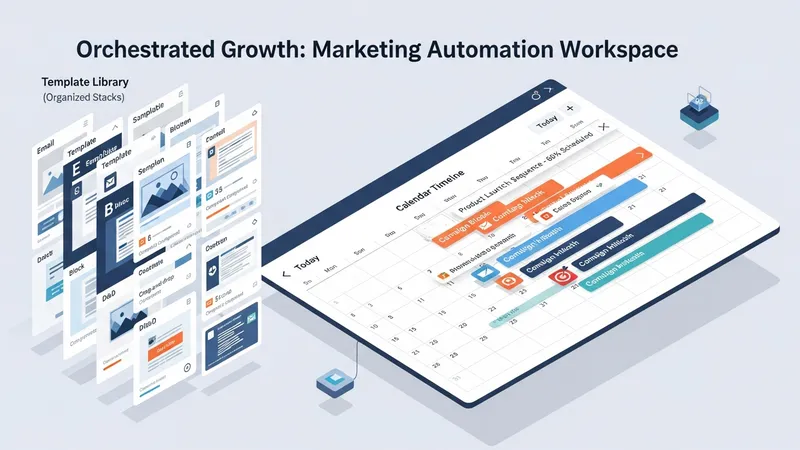
Feature sets are often grouped into recognizable categories that address distinct operational needs. Campaign management typically covers content creation, scheduling, and template libraries for consistent execution. Lead and audience management includes contact storage, segmentation engines, and lead scoring logic that can mark contacts for specific follow-up actions. Analytics and reporting modules offer tables and visualizations to monitor deliverability and engagement patterns. Understanding these categories helps teams map existing processes to available capabilities without assuming one size fits all.
Content scheduling and personalization capabilities may vary from basic merge-field substitution to sophisticated dynamic content that changes per recipient based on stored attributes or recent behavior. Personalization can be triggered by profile fields, transactional data, or event streams. When using personalization, teams commonly consider data freshness, fallback content for missing attributes, and the operational cost of maintaining personalized assets to avoid inconsistent recipient experiences.
Segmentation and audience-management tools typically let users combine multiple criteria—such as demographics, activity windows, and purchase history—to form cohorts. These cohorts can be static snapshots or dynamic segments that update automatically as contact attributes change. Dynamic segmentation often reduces manual list maintenance but may introduce computation overhead for very large datasets, which teams should account for in planning.
Workflow and automation editors differ in expressiveness and complexity. Simple systems support linear sequences with timed delays; more advanced editors enable event-triggered flows, conditional branching, and parallel paths. Teams often weigh the trade-off between expressive power and maintainability: highly complex flows may capture nuanced behavior but can be harder to audit and modify. Documentation and versioning features may assist in managing complex automation trees.
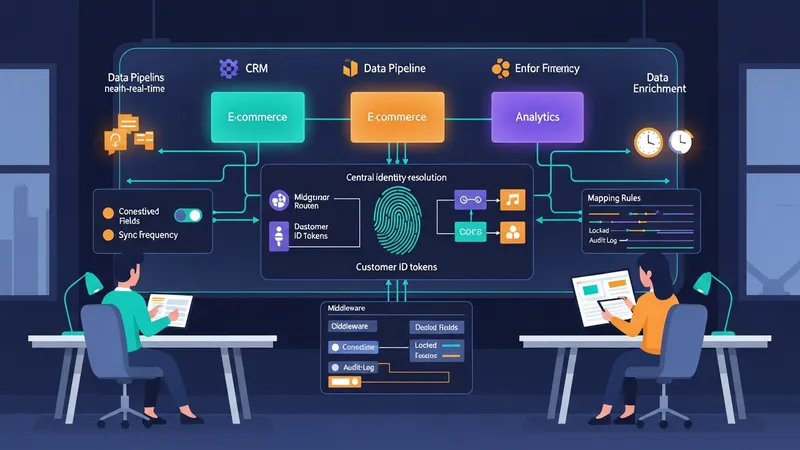
Integrations connect automation systems to customer relationship management, ecommerce platforms, analytics tools, and external data enrichment services. Common patterns include native connectors for popular applications, APIs for custom integrations, and batch file imports for legacy systems. Each pattern affects synchronization frequency: APIs can support near real-time updates, while scheduled imports may introduce delays that influence time-sensitive campaigns. Assessing the available integration methods helps determine how quickly and reliably contact state can be used within automation logic.
Data sources feeding automation platforms typically include first-party interaction data (website events, form submissions), transactional records, and imported lists. Ensuring consistent identifiers across systems—such as a stable customer ID—reduces duplication and improves matching accuracy. Teams often implement middleware or identity resolution layers when multiple systems contain overlapping records, and they treat mapping rules conservatively to avoid unintended overwrites of authoritative fields.
Data quality and governance considerations can significantly affect platform utility. Practices such as standardized field definitions, validation rules, and routine deduplication may reduce errors in targeting and reporting. Retention policies and archival processes should align with organizational requirements so that stale or inaccurate records do not drive automation decisions. Regular audits of segment definitions and field usage may help maintain data hygiene over time.
Privacy and compliance are functional constraints that influence integration choices and data handling. Systems that capture or route personal data may require configurable consent flags, suppression lists, and mechanisms to honor opt-outs. Teams should treat these capabilities as operational requirements rather than optional features, and they may plan for periodic reviews of privacy configuration and vendor controls as part of platform governance.
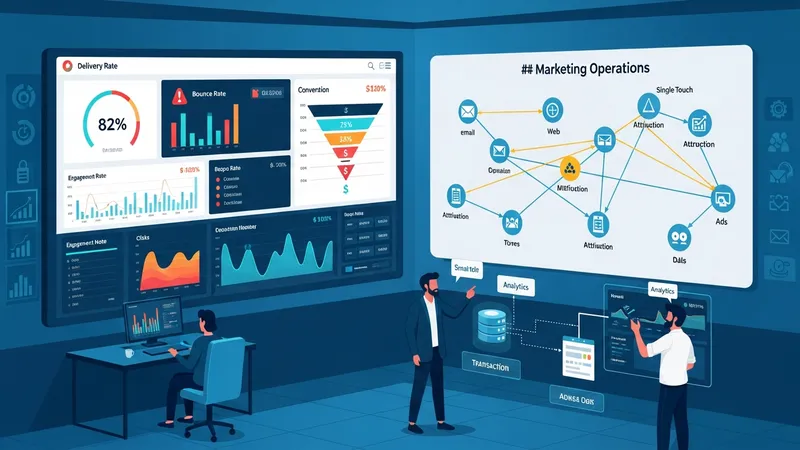
Key performance indicators tracked in these systems often include delivery metrics, engagement rates, and conversion-related events tied to campaign goals. Delivery metrics such as bounce and delivery rates can signal list quality issues. Engagement metrics, like opens and clicks, typically indicate message resonance, though they may be influenced by device defaults and privacy settings. Conversion events commonly rely on integration with web analytics or transaction systems to attribute downstream outcomes to marketing-driven interactions.
Attribution within automation ecosystems may use single-touch or multi-touch approaches depending on the complexity of customer journeys. Single-touch models assign credit to a single interaction, which can simplify reporting but often undercounts cross-channel influence. Multi-touch models distribute credit across interactions, which may provide a more nuanced view but require careful interpretation and consistent event capture. Analysts often combine platform-based attribution with external analytics for cross-validation.
Dashboards and exportable reports typically support operational monitoring as well as periodic evaluation. Operational dashboards may surface delivery health, active flows, and queue backlogs so operators can react to immediate issues. Periodic evaluation reports may summarize campaign performance over weeks or months and feed into planning cycles. When preparing dashboards, teams often prioritize a small set of metrics that map directly to strategic objectives to avoid noise.
Experimentation and testing features—such as A/B splits, multivariate tests, and hold-out audiences—may be available within automation platforms or implemented externally. Testing can clarify message variations, send times, and conditional logic effects. Practitioners frequently treat tests as informational rather than definitive, interpreting results with awareness of sample size, external variations, and the possibility of interaction effects across concurrent campaigns.

Successful use often depends on defined roles and cross-functional coordination. Typical roles include campaign owners who design and execute flows, data stewards who manage contact records and mappings, and analysts who interpret performance data. Clear handoffs and documented processes for content approval, segment definition, and campaign scheduling can reduce errors and improve throughput. Organizations may also establish governance committees to oversee major changes to automation logic and data policies.
Implementation and change-management factors may influence the time and resources required to adopt or expand an automation system. Teams often plan phased rollouts that prioritize high-impact use cases first, validate integrations, and progressively enable more complex workflows. Training and written procedures can help operational teams maintain consistency, and sandbox environments may provide a safe space to develop and test flows without affecting production audiences.
Cost considerations typically include license models, usage-based fees (such as per-contact or per-message pricing), and implementation expenses. Additional costs may arise from integration development, data storage, and ongoing maintenance. Organizations often evaluate total cost of ownership over a multi-year horizon and consider scalability—both technical and operational—when projecting future expenses. Budget planning commonly treats automation investments as part of a broader marketing technology stack rather than an isolated line item.
Maintenance, scalability, and vendor support considerations influence long-term viability. Regular reviews of active workflows, archival of deprecated assets, and periodic performance audits can keep the system aligned with evolving needs. Scalability planning may address increasing contact volumes, higher event throughput, and additional channel integrations. Teams often document escalation paths and support expectations to ensure operational continuity as usage grows and requirements change.