
The next-generation industry framework describes a structured approach to integrating digital technologies, automation, and data-driven practices into manufacturing and industrial operations. It emphasizes interoperable systems, sensor networks, and software-driven controls that enable tasks such as real-time monitoring, predictive maintenance, and flexible production flows. The framework is typically presented as a layered architecture that connects shop-floor devices to enterprise systems and external partners while incorporating analytics and decision-support tools.
Key components often include advanced automation, artificial intelligence (AI) applied to operations, industrial Internet of Things (IIoT) sensors, and digital twins that mirror physical assets. Within a Mexico context, these components may be adapted to local supply chains, manufacturing clusters, and regulatory programs. Implementation tends to focus on incremental integration—pilot projects followed by scaled rollouts—so that technical interoperability, data governance, and workforce alignment can be assessed before broader deployment.

Industry 4.0 trends in Mexico often align with established industrial clusters such as automotive manufacturing in Bajío and Nuevo León, aerospace in Querétaro, and electronics in Baja California. These clusters may adopt AI for quality inspection, robotics for assembly, and IIoT for asset monitoring. Public and private research organizations in Mexico can contribute to pilots; for example, local universities and CONACYT-affiliated programs may provide collaboration or funding pathways. Technical standards and integration work often require attention to connectivity, data formats, and local supplier ecosystems.
Operational benefits cited in Mexican implementations typically include improved equipment uptime through predictive maintenance models, more consistent product quality via vision systems, and energy management informed by sensor data. These benefits may be measurable as reductions in unplanned downtime or more stable yield rates, although outcomes depend on data quality, process maturity, and the scope of automation. Cross-functional teams that include operations, IT, and maintenance staff often support effective rollout and ongoing tuning of analytic models.
Adoption barriers in Mexico commonly relate to capital expenditure, systems interoperability, and workforce readiness. Initial capital needs for sensors, edge devices, and integration work can be significant; financing or phased investment models may be considered. Interoperability between legacy equipment and modern software platforms often requires gateways or retrofitting. Workforce development is another consideration—technical and maintenance personnel may require upskilling in areas such as data interpretation, basic programming, or robotics maintenance.
Regulatory and supply-chain factors can influence the pace and shape of adoption. Mexico’s trade regimes, supply-chain dependencies across North America, and local environmental rules may affect which technologies are prioritized. Public programs and industry associations may offer guidance or co-funding for pilots, and collaboration with local suppliers can reduce integration friction. Successful projects often start with narrowly scoped pilots, use measurable performance indicators, and expand when operational value becomes clearer.
In summary, the next-generation industry framework in Mexico describes a layered approach that integrates automation, AI, and IIoT into manufacturing and logistics, with examples across prominent Mexican clusters. Implementation typically involves pilot phases, attention to interoperability, and alignment with local programs and workforce capacity. The next sections examine practical components and considerations in more detail.
Core technology components of the framework often include IIoT devices, edge computing, cloud analytics, AI models for anomaly detection, and digital twin representations of assets. In Mexican facilities, IIoT sensors may be installed on existing production lines to capture vibration, temperature, and throughput data that feed local edge servers before selective data is forwarded for enterprise analytics. Associations such as AMITI and research groups associated with CONACYT often document these technology patterns for local industry. Technology selection is commonly driven by interoperability needs and the ability to operate with variable network reliability in some sites.

AI integration typically focuses on specific operational tasks rather than broad enterprise replacement. For example, machine vision models may be trained to detect weld defects on automotive components in factories near Monterrey, or predictive maintenance models may analyze vibration data from pumps in chemical plants in Veracruz. Model training and validation often require access to historical failure records and labeled data, which can be a constraint. Companies may partner with Mexican universities or local system integrators to develop and validate algorithms under operational conditions.
Edge computing often appears in Mexican implementations to reduce latency and bandwidth use, keeping control loops and initial analytics on-premise while synchronizing summarized metrics to cloud systems for historical analysis. This hybrid approach may be favored where internet connectivity is inconsistent or where data sovereignty considerations apply. Connectivity technologies such as industrial Ethernet, Wi‑Fi, and private LTE can be employed depending on plant layout and regulatory constraints affecting radio spectrum in Mexico.
Standardization and protocols are practical considerations: OPC UA, MQTT, and Modbus are commonly referenced when integrating legacy PLCs with modern analytics platforms. Mexican integrators and equipment vendors often provide protocol translators or retrofitting services to enable data extraction from older machines. These interoperability steps are typically part of early pilot phases so that data pipelines and format conversion challenges can be addressed before scaling across multiple sites or product lines.
Manufacturing clusters in Mexico show recurring use cases that align with the framework. In automotive plants across the Bajío region, robotics and coordinated line monitoring may be used to increase consistency in assembly while reducing human exposure to repetitive tasks. Aerospace facilities in Querétaro often emphasize precision inspection with vision systems and traceability tied to supply-chain certifications. These sector-specific applications demonstrate how similar technologies can be adapted to distinct production tolerances and regulatory expectations within Mexico.

Cement and heavy materials producers operate large fleets and continuous processes where predictive maintenance and fleet telematics can influence costs and uptime. For example, Mexican cement operations may deploy remote monitoring on kilns and delivery fleets to optimize fuel consumption and logistics. Food and beverage producers such as larger Mexican-based firms may trial energy management systems and batch-traceability solutions that address both operational efficiency and compliance with sanitary regulations.
Small and medium-sized manufacturers often pilot modular solutions that address one pain point, such as automating a test station or implementing a quality inspection camera. Pilot scopes for these firms in Mexico may range from modest sensor-and-gateway deployments to larger retrofits; typical initial investments can vary widely depending on scale, and projects may be staged to manage capital expenditure. Collaboration with local integrators or regional technology clusters frequently helps smaller firms manage procurement and technical barriers.
Supply-chain visibility is another practical use case in Mexico, where cross-border logistics and supplier networks are influential. Tracking components across maquiladora operations and Tier 1 suppliers can enable more predictable lead times and help firms respond to demand fluctuations. These visibility projects often tie into ERP systems and require agreement on data-sharing standards among trading partners, which can be facilitated by industry associations or local trade programs.
Capital costs, financing structures, and expected returns are commonly considered when evaluating adoption in Mexico. Initial pilots may be financed internally or supported by collaborative programs; some projects in Mexican manufacturing have reported pilot cost ranges that vary from modest sensor packages to multi‑million MXN retrofits as scope increases. Financial planning typically accounts for phased investment, focusing on measurable performance indicators such as downtime reduction or energy savings before larger capital commitments are made.
Workforce readiness and training are frequent considerations. Mexican technical schools (such as CONALEP) and university engineering programs often collaborate with industry to update curricula that reflect automation and data skills. On-site upskilling may include training maintenance technicians on PLC basics, teaching data analysts how to interpret production dashboards, or certifying operators on new human‑machine interfaces. These trainings are treated as ongoing investments that may take months to yield operational fluency.
Supply‑side capacity matters: local integrators, small sensor vendors, and system houses in Mexico may have specialized experience with regional equipment fleets, which can reduce lead times and customization needs. Procuring services from Mexican integrators can also simplify warranty and maintenance interactions. Firms often include supplier readiness as a selection criterion when planning larger rollouts, particularly where rapid response for critical equipment is required.
Policy and fiscal factors in Mexico can influence financial calculations. Programs tied to the IMMEX regime or regional development incentives may shape the timing and type of investments. Firms evaluating projects typically consider the administrative requirements and compliance steps associated with these programs, and they may consult official Secretaría de Economía guidance when estimating net investment needs and potential fiscal alignment for automation projects.
Regulatory frameworks and industry standards can shape implementation choices. Data privacy and cross‑border data flows may be relevant when cloud services are used, and firms in Mexico often assess whether data can be stored locally or needs to be accessed by regional partners. Compliance with environmental, safety, and quality regulations also guides system design, particularly in sectors such as food, pharmaceuticals, and chemicals where traceability and auditability are required by Mexican authorities.
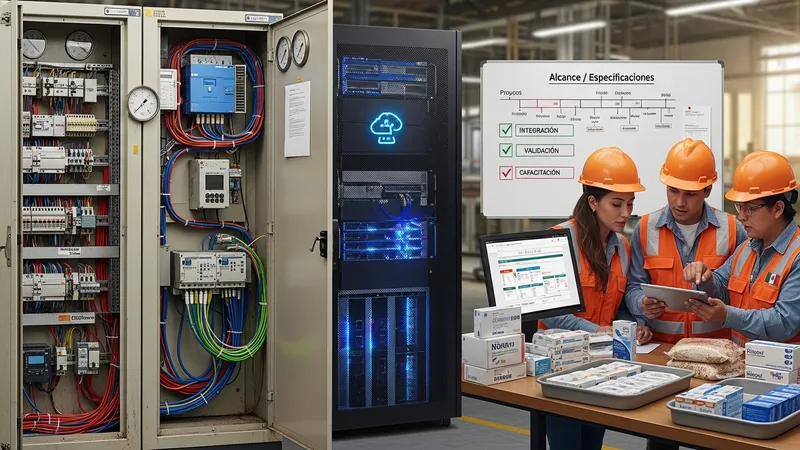
Implementation challenges commonly include integrating legacy equipment, securing skilled integrators, and aligning procurement cycles. Legacy PLCs or proprietary control systems may lack native interfaces for modern analytics, requiring gateways or custom integration. Procuring qualified integrators and define‑scope documents that match Mexican operational contexts can reduce delays. Pilot projects often include explicit milestones for integration, validation, and operator training to manage these challenges pragmatically.
Public and industry support mechanisms may assist adoption. Mexican institutions such as CONACYT and regional development agencies sometimes provide technical assistance or co‑funding for innovation projects, and industry associations may publish guidance on standards and best practices. Firms commonly consider these sources as part of their implementation planning, using them to offset technical risks and to access domain expertise from local research centers or universities.
Scaling successful pilots to multiple plants requires governance around data quality, change management, and continuous improvement. Mexican firms that plan for standardized data schemas, clear ownership of analytics models, and structured operations‑IT collaboration may reduce friction during rollouts. These governance elements are typically developed iteratively as pilots surface interoperability or organizational issues that need broader policy or process updates before wider adoption is pursued.