
Oncology research and treatment involves the study of cancer biology, methods for detecting and characterizing tumors, and the organisation of care pathways that move a patient from diagnosis through treatment and follow-up. This field combines laboratory science, clinical investigation, diagnostic imaging and pathology, and health services planning to understand how cancers develop, how they respond to different interventions, and how care can be coordinated across providers. The focus is on generating evidence about disease mechanisms, testing interventions in structured studies, and structuring care pathways so that diagnostic and therapeutic steps are coherent and measurable.
Key domains within oncology research and treatment include molecular and cellular investigations, clinical trials and observational studies, diagnostic and staging processes, and systems for coordinating multidisciplinary care. Each domain contributes distinct types of data and decision points: laboratory assays generate biological hypotheses, diagnostic procedures establish disease extent, trials evaluate safety and efficacy, and care pathways address logistics, supportive services, and transitions between settings. Taken together, these areas form an evidence ecosystem that may inform clinical practice, guideline development, and health system planning without implying specific outcomes for individual patients.
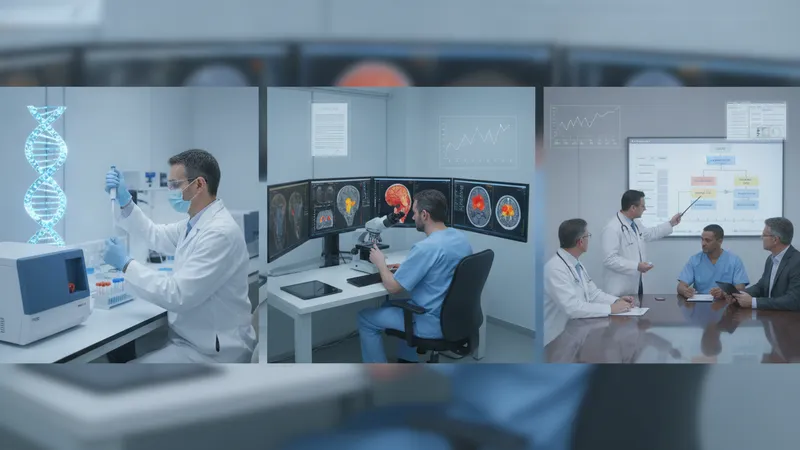
Comparisons among research approaches may clarify strengths and limitations rather than declare superiority. For example, preclinical models such as cell lines and animal studies can offer mechanistic insight but typically do not predict clinical outcomes with certainty; translational studies bridge those models to human biology. Observational cohort studies may identify associations and real-world patterns but often require cautious interpretation because of potential confounding. Randomised controlled trials (RCTs) usually provide more direct evidence about causal relationships between interventions and outcomes, while remaining subject to design constraints such as population selection and follow-up duration.
Frameworks for diagnostic and staging processes often combine imaging, pathology, and biomarker assays to characterise tumour type and extent. Diagnostic imaging modalities (e.g., ultrasound, CT, MRI, PET) can assess anatomic and metabolic features, whereas pathology establishes histologic subtype and grade. Molecular profiling may provide additional information about genetic alterations and expression patterns that can inform trial eligibility or targeted approaches. These components typically feed into staging classifications that guide treatment planning and prognostic discussions, recognising that staging systems and available assays evolve over time.
Clinical trial phases and design elements serve distinct roles in evidence generation. Phase I studies typically evaluate safety and dose-ranging, phase II studies explore preliminary activity or signal detection, and phase III trials compare interventions against standard approaches to evaluate efficacy and relative risks. Adaptive and basket trial designs may allow evaluation across multiple tumour types or biomarker-defined groups, often aiming for efficiency in assessing targeted hypotheses. Trials may be complemented by registries and real-world evidence sources that capture broader patient experiences and longer-term outcomes beyond trial confines.
Care coordination and supportive services address non-biological factors that affect patient experience and treatment delivery. Navigation programmes, multidisciplinary tumour boards, symptom-management clinics, and rehabilitation services can help align diagnostic results with treatment plans and follow-up schedules. Supportive care interventions—such as pain management, nutritional support, and psychosocial services—may be integrated at various points along care pathways to address quality of life and functional needs. These services are typically organised within health systems to improve continuity and to manage transitions among inpatient, outpatient, and community settings.
In summary, oncology research and treatment is a multidisciplinary enterprise that spans laboratory investigation, structured clinical evaluation, diagnostic staging, and organised care pathways. Each component contributes to a broader evidence base that may inform clinical decisions, health system planning, and research priorities. The following pages examine practical components and considerations in more detail.
Laboratory research methods commonly used in oncology studies include in vitro assays, organoid cultures, and in vivo animal models; each may provide different levels of biological fidelity. Genomic and transcriptomic profiling techniques can identify molecular alterations and expression patterns that inform hypothesis generation. Translational research seeks to move findings from these platforms into clinical testing, often using biomarker-driven eligibility criteria. Considerations for researchers include reproducibility, sample quality, and the generalisability of model systems to human disease. These methodological aspects may shape how preclinical insights enter clinical pathways and trial designs.
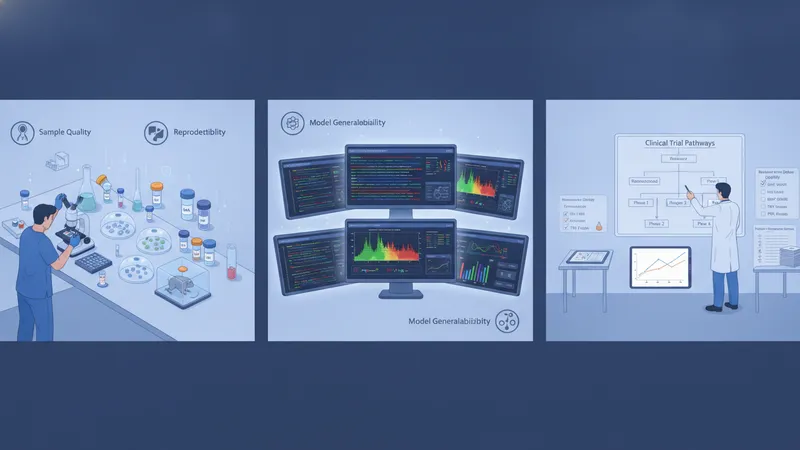
Study design choices can influence the types of conclusions that are plausible. Randomised trials may control for known and unknown confounders, while observational designs may be more feasible for rare conditions or long-term outcomes. Adaptive trial features may allow mid-study modifications based on pre-specified rules, which can conserve resources but require careful statistical planning. Patient selection criteria, endpoints (e.g., survival, progression-free intervals, patient-reported outcomes), and follow-up duration are typical design elements that investigators balance against feasibility and ethical considerations.
Biomarker validation is a recurring methodological challenge in oncology research and treatment pathways. Analytical validity (assay performance), clinical validity (association with disease characteristics), and clinical utility (usefulness for decision-making) are separate domains that often require sequential evaluation. Diagnostic assays may undergo regulatory review or laboratory accreditation processes in different jurisdictions, and laboratories typically document performance characteristics. Researchers and clinicians may treat biomarker data as one input among several when defining treatment pathways or trial eligibility.
Data management and reproducibility practices are important considerations for oncology research. Standardised data collection, anonymisation practices, and transparent reporting of methods may support secondary analysis and meta-research. Statistical approaches for handling missing data, multiplicity of comparisons, and effect modification are common technical issues. Sharing of de-identified datasets and protocols can facilitate replication and broader learning, although legal and privacy considerations often inform what data can be shared and how it is governed.
Diagnostic workups in oncology typically combine clinical assessment, imaging, tissue biopsy, and laboratory testing to establish tumour type and stage. Imaging modalities offer complementary information: cross-sectional imaging defines anatomy, metabolic imaging can indicate activity, and specialised techniques may characterise vascular or functional aspects. Pathology provides histologic classification and grading, while molecular assays may identify actionable alterations or prognostic markers. Diagnostic accuracy depends on sampling technique, assay sensitivity, and interpretive expertise, and these factors can influence subsequent pathway decisions.
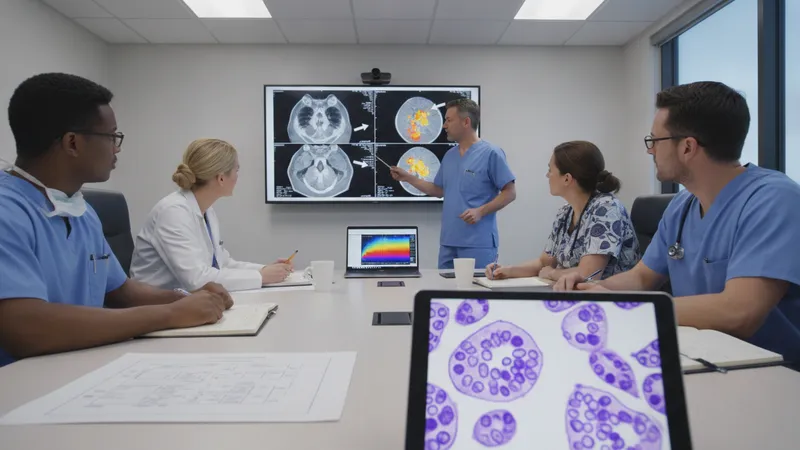
Staging systems are commonly used to summarise disease extent and to stratify patients for treatment and prognosis. Staging integrates tumour size, nodal involvement, and presence of distant spread, and some systems incorporate molecular or histologic features. Accurate staging may require coordinated scheduling of tests and multidisciplinary review to ensure completeness. In research settings, standardised staging criteria enable comparability across studies, while in clinical practice staging information often informs immediate treatment planning and selection of supportive services.
Quality assurance in diagnostic processes is a practical consideration for both clinical services and research. Pathology peer review, radiology second reads, and standardised reporting templates can reduce variability in interpretation. Laboratory accreditation and proficiency testing may document assay performance for molecular tests. Coordinating diagnostic results into electronic health records and tumour registries can help track care pathways and facilitate outcome measurement, though interoperability and data governance remain common operational challenges.
Timing and sequencing of diagnostic steps affect care pathways and trial enrollment. Rapid diagnostic pathways may shorten time to treatment initiation for selected patients, while staged assessment can allow for multidisciplinary planning. In research contexts, timely availability of biomarker results may determine eligibility for targeted studies. Considerations include logistics for sample transport, availability of specialised assays, and systems for communicating results to treating teams, all of which can influence pathway efficiency and patient experience.
Clinical studies in oncology typically progress through defined phases with distinct objectives: early-phase studies assess safety and dosing, intermediate studies explore activity, and later-phase trials evaluate comparative effectiveness. Endpoint selection varies by phase and question: safety metrics are central early, while survival and patient-reported outcomes may be primary in later trials. Statistical power, control groups, and pre-specified analysis plans are critical elements that influence the interpretability of results. Understanding the phase-specific aims helps stakeholders place findings into appropriate clinical and regulatory context.
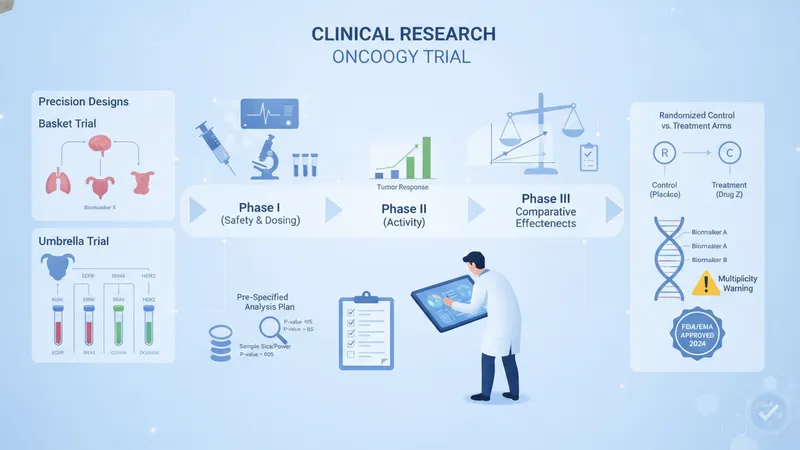
Adaptive and precision-oriented trial designs are increasingly used to match interventions to molecular features. Basket trials test a single intervention across multiple histologies that share a biomarker, while umbrella trials test multiple interventions within a single tumour type stratified by biomarkers. These designs may enhance efficiency in evaluating targeted hypotheses, but they require careful control of multiplicity and clear rules for interpretation. Results from such designs often require cautious interpretation about generalisability beyond specific biomarker-defined cohorts.
Evidence synthesis and regulatory considerations influence how trial results translate into practice. Systematic reviews and meta-analyses can pool data to estimate effect sizes across studies, often using pre-defined inclusion criteria. Regulatory agencies and guideline panels review the totality of evidence, considering study quality, consistency, and patient-centered outcomes. Post-approval studies and real-world evidence may further characterise safety and effectiveness in broader populations, providing complementary insights to controlled trials.
Interpreting trial outcomes in clinical contexts involves attention to absolute and relative measures, subgroup analyses, and patient-centered endpoints. Statistical significance does not always equate to clinical relevance, and effect sizes should be considered alongside potential harms, patient preferences, and care-system capacity. Reporting of adverse events, quality-of-life measures, and long-term follow-up data may inform how trial findings are integrated into care pathways and shared decision-making processes, recognising that evidence evolves over time.
Organising care pathways in oncology involves aligning diagnostics, treatment planning, and supportive services across multidisciplinary teams. Multidisciplinary tumour boards commonly bring together oncology, surgery, pathology, radiology, and supportive-care specialists to review complex cases and to harmonise recommendations. Care pathways may specify timing of interventions, roles for navigation services, and checkpoints for symptom management. Structured pathways can facilitate consistent documentation and enable measurement of process metrics such as time-to-treatment or adherence to guideline-based steps.

Supportive services are integral components of oncology pathways and often include symptom management, rehabilitation, psychosocial care, and survivorship planning. These services may be delivered by specialised teams or integrated into oncology clinics. Symptom assessment tools and patient-reported outcome measures can help identify needs and guide interventions. Coordination between acute care, outpatient services, and community resources is typically required to address complex needs over the course of treatment and recovery.
Health-system and operational considerations shape how pathways function in practice. Resource availability, workforce expertise, and information systems (e.g., electronic health records, referral tracking) influence pathway throughput and continuity. Monitoring process and outcome metrics can identify bottlenecks and areas for improvement, while pilot projects and iterative process mapping may inform system changes. Stakeholders often consider feasibility, equity of access, and scalability when planning pathway adjustments, treating these as operational considerations rather than guarantees of outcome.
Patient engagement and communication practices are practical considerations for pathway success. Clear communication about diagnostic steps, likely timelines, and supportive resources may help align expectations. Navigation services and care coordinators can play roles in bridging transitions between diagnostic, treatment, and survivorship phases. Evaluations of pathway performance often include patient experience measures alongside clinical metrics, recognising that system-level organisation and individual-level support both contribute to the overall care experience.