
Service robots equipped with artificial intelligence (AI) are autonomous machines designed to carry out tasks in a range of environments. These robots use sensors, machine learning algorithms, and data processing to interpret and interact with their surroundings. They are increasingly used to streamline operations in spaces such as warehouses, hotels, and healthcare settings. By leveraging AI, these robots may adapt to changing conditions and execute tasks with minimal human input.
Integration of AI into service robots allows for improvements in efficiency and adaptability. Unlike traditional automation, AI-based robots often learn from past experiences, enabling continuous refinement of their processes. This can contribute to smoother workflows and potentially reduce manual labor, as robots may handle repetitive tasks or respond to real-time data.

Service robots with AI typically offer scalability across different industries by adjusting their programming and sensor packages. In logistics, robots may be programmed for materials handling, which can allow them to navigate complex warehouse layouts and respond to updated inventory data. In hospitality, delivery robots may communicate securely with elevators and room entry systems, emphasizing interoperability and operational efficiency.
Data handling is central to these robots’ capabilities. AI-driven service robots process inputs from cameras, LiDAR, and other sensors to understand their environment. Through ongoing data analysis, they may learn optimal routes, recognize patterns, and respond to obstacles or requests. This aspect is significant in environments such as hospitals, where workflows are dynamic and safety is critical.
Operational benefits attributed to AI-powered service robots typically include increased reliability in routine tasks and support for human workers. In addition, these systems can offer standardized quality and process compliance. However, successful deployment may depend on infrastructure compatibility, staff collaboration, and technology integration plans.
Several considerations influence the adoption and function of service robots with AI. These include initial setup costs, employee training requirements, ongoing maintenance, and data privacy standards. Organizations may also account for operational transparency and the ability to customize robots for changing needs. Collaboration between product developers, operators, and end users typically shapes successful implementation.
AI-enabled service robots represent an evolving field where applications expand in response to shifting operational requirements. Their contributions may range from supporting staff to automating foundational processes. The next sections examine practical components and considerations in more detail.
Service robots powered by AI take various forms depending on their intended task and environment. Mobile robots are frequently used in logistics to move goods within warehouses or distribution centers. These machines commonly feature autonomous navigation, obstacle avoidance, and adaptive routing to manage inventory movement. Collaborative robots, or “cobots,” are also gaining attention for their ability to work safely alongside humans in shared spaces, such as in hospitals or retail.
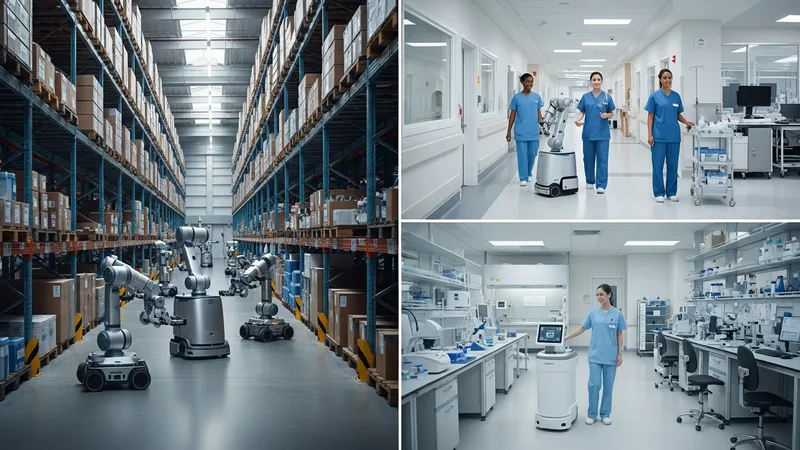
Stationary service robots are another category employed in environments requiring repetitive, precise actions. For example, some laboratory robots assist with sample sorting and analysis by using pre-programmed routines and real-time input data. Mobile service robots, by contrast, are designed to interact with diverse physical environments, overcoming challenges like dynamic obstacles or moving between floors via elevators.
Differentiation among these types often involves their sensor arrays, mobility systems, and integration with enterprise software. Some robots are equipped for complex communication with building systems, such as automated doors or temperature controls, allowing for more seamless task fulfillment. Others focus on simple, direct delivery, navigating corridors with pre-set maps and minimal user input.
End users may select the type of service robot based on operational requirements, facility layout, or the need for specialized sensors. Decision-making often considers aspects such as scalability, ease of deployment, and how robots can be networked with other digital systems. As technology progresses, distinctions between these types may shift with advancements in hardware and AI algorithms.
The functionality of AI-driven service robots is built on an array of foundational technologies. Key components often include sensors for environmental awareness, such as cameras, infrared, and ultrasonic devices. These sensors collect data that enable robots to localize themselves, detect objects, and navigate through complex spaces. The combination of these technologies contributes to the autonomy and adaptability observed in many modern service robots.
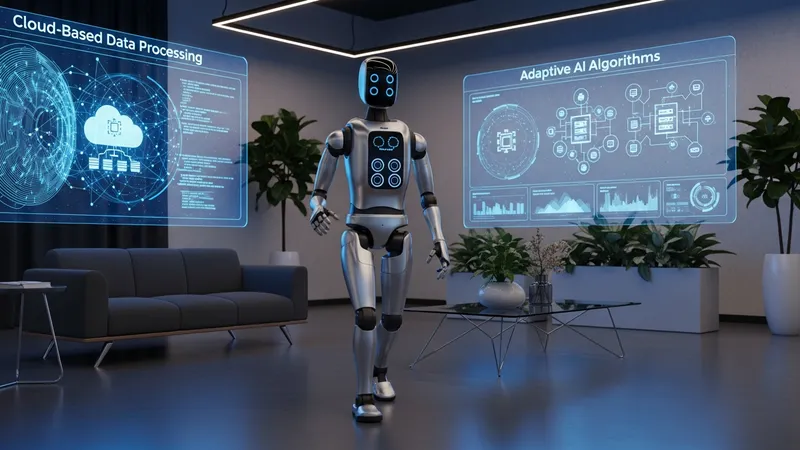
Machine learning models are central to these systems. They typically process environmental data and inform the robot’s actions by predicting outcomes or classifying objects. Training datasets, gathered through operation or simulation, allow robots to improve decision making over time. Cloud-based processing may be leveraged to augment local computation, enabling advanced AI capabilities without overburdening onboard hardware.
Communication protocols are another critical area supporting AI-enabled service robots. Wi-Fi, Bluetooth, and dedicated radio channels are used for real-time updates, coordination with other robots, or integration into building management systems. Security measures and data encryption standards can be crucial in settings where confidential information may be present, particularly in healthcare or corporate services.
Integration platforms and software development kits (SDKs) support customization and expansion of robot capabilities. These tools may be used to tailor robot functions to specific workflows and to ensure compatibility with legacy systems. The use of open standards and modular architecture continues to influence how flexible and interoperable service robots can become in real-world applications.
The implementation of AI service robots in operational settings can affect workflow design, labor allocation, and customer experiences. In logistics, robots often assume repetitive or physically demanding tasks, allowing employees to focus on oversight, troubleshooting, or value-added activities. In hospitality, these systems may handle deliveries or room service, offering consistent response times and reducing the need for staff to traverse large facilities.
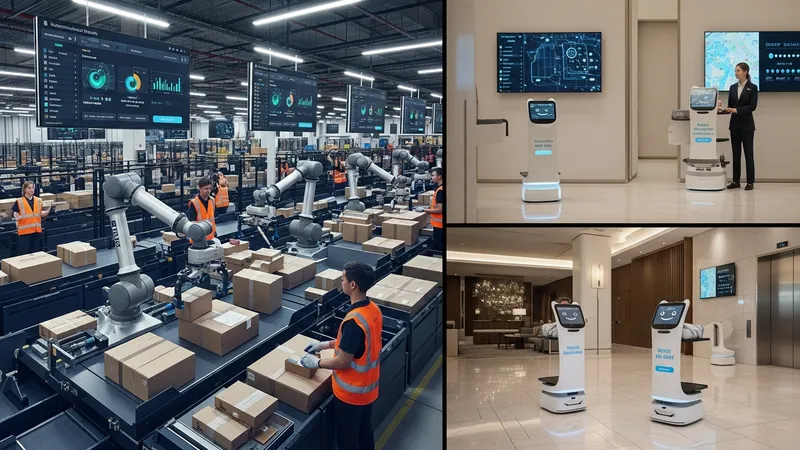
Performance monitoring and analytics frequently inform the ongoing operation of service robots. Organizations may track key metrics such as task completion rates, downtime, and error frequencies to assess effectiveness. Over time, data gathered can identify bottlenecks or areas for refinement, allowing for evidence-based process improvements without direct intervention.
Employee training and change management are essential to successful integration. Staff typically require orientation on how to interact with and oversee robots, as well as protocols for addressing technical issues or safety events. This collaborative approach may foster acceptance and optimize the benefits realized through automation, while ensuring human roles remain an integral part of operations.
While operational efficiency is a frequent objective, organizations also weigh potential limitations. Challenges may involve navigating non-standard spaces, integrating with evolving IT infrastructure, or addressing privacy considerations related to data collection. By recognizing such factors, decision makers can take measured steps towards effective integration of AI-powered service robots.
Looking ahead, advancements in AI, robotics, and connectivity may shape how service robots are developed and utilized in daily operations. Further progress in natural language processing and environmental sensing could enable more nuanced human-robot interactions. This evolution might facilitate broader deployment across industries as robots become capable of complex task adaptation and learning in real-time contexts.

Scalability and interoperability remain ongoing areas of focus for developers and operators. As facilities grow or contract, the ability to adjust the number and function of service robots may prove important. Flexible architecture and standardized communication protocols could support these objectives while reducing integration barriers across hardware and software platforms.
Ethical and regulatory aspects will likely influence the adoption and design of service robots with AI. Considerations include ensuring privacy, maintaining data security, and evaluating impacts on labor practices. Policymakers and industry stakeholders may collaborate to establish guidelines that support technological advancement while protecting key interests. Public engagement and transparent reporting are integral to building trust in these technologies.
In summary, AI-enabled service robots represent a dynamic area blending automation, data analytics, and adaptive learning. Their presence in daily operations may continue to expand as solutions to recurring tasks, allowing organizations to shift resources and refine service models. Ongoing evaluation and research will guide responsible innovation and the integration of robotics in diverse operational contexts.