
Men aged 50 and older often encounter changing nutrient needs as part of the normal aging process. This concept covers categories of dietary supplements that are commonly discussed for older men in the United States, the nutritional reasons these categories are considered, and the practical considerations that influence choice and use. The focus is on describing nutrient roles, common ingredient forms, and the contextual factors—such as dietary intake, metabolic changes, and medication use—that may affect whether a supplement is appropriate.
Within this context, the term “supplement” refers to concentrated sources of vitamins, minerals, fatty acids, herbs, probiotics, or other substances taken in addition to the usual diet. Discussion typically emphasizes nutrients where intake or absorption can decline with age, or where U.S. dietary patterns leave gaps. The material here is informational: it explains categories and considerations rather than prescribing specific products or regimens.

These categories are representative rather than exhaustive. Selection criteria for the examples above were based on: frequency of mention in U.S. clinical guidance and public health literature, typical relevance to age-related physiological changes, and availability of authoritative consumer information from U.S. agencies. The descriptions avoid claims about disease treatment and focus instead on typical roles these nutrients may play within a broader diet and lifestyle context.
Vitamin D and calcium are often discussed together because vitamin D helps regulate calcium absorption; older adults in the U.S. may have lower sun exposure or dietary intake, which can influence circulating vitamin D levels. Serum 25-hydroxyvitamin D testing may be used clinically to assess status, and healthcare providers in the U.S. may consider dietary sources, fortified foods, and measured intake when advising on supplementation. Information from U.S. sources typically notes that needs can vary by individual health conditions and medications.
Vitamin B12 absorption can decline with age due to reduced gastric acid or changes in intrinsic factor; thus, certain forms of B12 (for example, methylcobalamin or cyanocobalamin) are noted in discussions about supplementation. U.S. dietary intake surveys and clinical practice patterns often highlight testing or monitoring for deficiency when symptoms or risk factors are present. The consumer-focused pages from U.S. agencies provide context on common causes of low B12 and laboratory assessment.
Omega-3 fatty acids (EPA and DHA) are frequently referenced in U.S. discussions about older adult nutrition, primarily as components of fish oils and some fortified foods. Patterns in U.S. consumption tend to vary by region and dietary habits; public health guidance generally emphasizes food sources (like oily fish) first and notes that supplemental forms are available. Interactions with medications such as blood thinners are commonly noted in U.S. clinical information and should be considered as part of a safety evaluation.
Probiotics and digestive-targeted supplements are included because gastrointestinal changes and medication use can affect the microbiome and digestive tolerance in older adults. U.S.-based resources underscore that evidence for specific strains and indications varies, and label information often lists strain designations and CFU counts. Consumers and clinicians in the U.S. typically look to product labels and third-party testing reports when evaluating probiotic products due to variability among formulations.
In summary, conversations about supplements for men over 50 in the U.S. generally center on nutrients where intake, absorption, or physiological demand may change with age. Considerations include formulation, laboratory assessment, medication interactions, and evidence for specific outcomes; choices are typically individualized and discussed with clinicians. The next sections examine practical components and considerations in more detail.
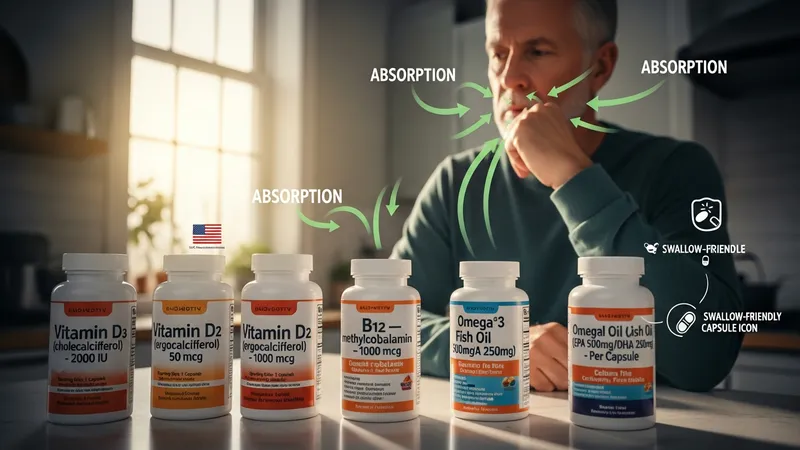
Different nutrient forms can affect absorption and tolerability. For example, vitamin D is sold as D2 (ergocalciferol) and D3 (cholecalciferol), with D3 often used in U.S. supplements because it may raise serum 25-hydroxyvitamin D more effectively in some studies. B12 appears in several chemical forms such as cyanocobalamin and methylcobalamin; U.S. clinicians and laboratory reports may note which form is being used when interpreting response. Omega-3 products vary by source (fish oil, algal oil), concentration, and the balance of EPA to DHA.
Bioavailability and excipient choices can matter for older adults. Some formulations are designed for easier swallowing (capsules vs tablets) or for better absorption with meals. In the United States, consumers often consider whether a product is standardized for an active component (for example, a declared milligram amount of EPA/DHA) and whether it lists auxiliary ingredients that may affect tolerability. Labels commonly show serving size and nutrient amounts per serving, which can be compared to U.S. dietary reference intakes.
Standardized extracts and single-nutrient versus multi-nutrient formulations are common distinctions. Single-nutrient products allow targeted dosing for a specific deficiency or need, whereas multivitamin–mineral products provide broader coverage of several micronutrients that may be low in U.S. dietary patterns. U.S. nutrition surveys frequently show variability in intake of nutrients such as vitamin D and omega-3s, which informs why both single-ingredient and combination products are available on the market.
Third-party verification and label clarity are practical factors. U.S. third-party organizations such as U.S. Pharmacopeia (USP) and NSF International provide testing and verification programs that some manufacturers use; consumers and clinicians sometimes look for these marks as one element of product evaluation. These organizations typically test for ingredient consistency and contaminants and provide searchable directories for interest in U.S.-market products.
Safety assessment typically includes review of concurrent prescription and over-the-counter medications. For example, omega-3 supplements may affect bleeding risk when combined with anticoagulant therapy such as warfarin, and vitamin K–containing supplements can interact with vitamin K antagonist medications. In the U.S., clinicians commonly consider published interaction databases and product labels when evaluating potential interactions, and monitoring strategies may include targeted laboratory tests when clinically indicated.
Regulatory context in the United States influences safety expectations. Under the Dietary Supplement Health and Education Act (DSHEA), dietary supplements are regulated as a category of food; manufacturers are responsible for product safety and labeling, while the U.S. Food and Drug Administration (FDA) oversees post-market surveillance and can act if products are unsafe or mislabeled. U.S. consumers and professionals often refer to FDA resources on dietary supplements and adverse event reporting for current safety information: FDA dietary supplements.
Monitoring strategies in U.S. clinical practice may include baseline and follow-up laboratory tests where deficiency or excess is a concern. For instance, clinicians might measure serum 25-hydroxyvitamin D for those at risk of low levels, or check serum B12 and hemoglobin in the presence of anemia or neurological symptoms. Such testing is typically individualized and may be influenced by U.S. practice patterns, insurance coverage, and patient health histories.
Adverse event reporting and product quality concerns are part of the U.S. safety landscape. The FDA’s MedWatch system accepts reports related to dietary supplements, and health professionals in the U.S. may submit suspected adverse events to support post-market surveillance. Product quality issues such as contamination or incorrect labeling have been documented in specific cases, reinforcing the importance of careful evaluation of source, manufacturing information, and available test results when considering supplement use.
Supplements are often discussed as a complement to food-based strategies and lifestyle measures rather than a standalone solution. In the U.S., dietary guidance emphasizes nutrient-dense foods—such as fatty fish for omega-3s, fortified dairy or plant alternatives for vitamin D and calcium, and a variety of foods rich in B vitamins—to help meet needs. Resources like the U.S. Department of Agriculture’s MyPlate provide practical food-based frameworks that many U.S. nutrition professionals reference.

Physical activity and weight-bearing exercise are commonly cited components of strategies for bone and musculoskeletal health in older adults. U.S.-based public health guidance often pairs dietary intake considerations with activity patterns, noting that combined approaches can support functional health. Sun exposure patterns also affect vitamin D status in the U.S.; clinicians may discuss safe sun exposure practices balanced with skin cancer risk and individual health history.
Timing and co-ingestion considerations are practical details that may affect nutrient absorption. For instance, fat-soluble vitamins such as vitamin D and omega-3s are often absorbed more effectively when consumed with a meal that contains fat. Some minerals can compete for absorption when taken together, so staggered dosing is sometimes discussed in U.S. clinical settings. These are considerations rather than directives and are typically tailored by clinicians to individual circumstances.
Food security, access, and cost can influence whether supplements are considered in U.S. populations. Older adults in the United States may face variability in access to fresh food, fortified products, or healthcare services, which can affect dietary patterns and choices. Federal and local nutrition programs in the U.S. may provide resources for older adults; these contextual factors are often part of a comprehensive assessment when addressing nutrient gaps.
Label information is a primary source of consumer-facing detail in the U.S. market. U.S. supplement labels typically list serving size, nutrient amounts per serving, ingredient lists, and any structure/function claims (which must include a disclaimer that the claim has not been evaluated by the FDA). Ingredient transparency—including the chemical form of a vitamin, specified milligram amounts of omega-3 fatty acids, and strain identifiers for probiotics—helps clinicians and consumers interpret product intent and content.
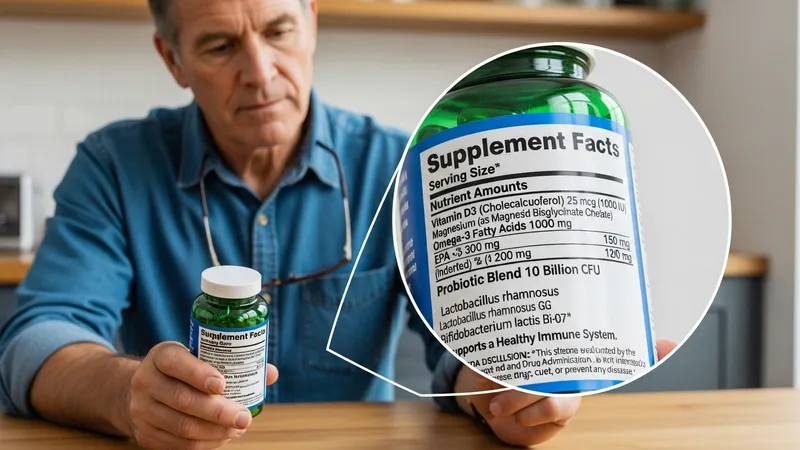
Third-party testing and verification can supplement label information. Organizations such as U.S. Pharmacopeia (USP) and NSF International operate verification programs commonly referenced in the United States; they test for ingredient verification, contaminants, and manufacturing quality. U.S. purchasers sometimes consult these directories or verification marks as part of a broader evaluation that also considers clinical needs and cost.
Purchasing considerations in the U.S. market include retail source, price transparency, and return policies. Supplements are available through pharmacies, supermarkets, direct-to-consumer channels, and specialty retailers; each channel offers different degrees of product information and return practices. Because U.S. regulation does not require pre-market approval of dietary supplements, consumers and clinicians often look to label clarity, third-party testing, and authoritative guidance when choosing products for older adults.
Documentation and record-keeping are practical steps recommended in U.S. clinical contexts for anyone using supplements alongside prescription medications. Keeping an up-to-date list of all prescription drugs, over-the-counter medicines, and supplements can help U.S. clinicians identify potential interactions or duplications. These records are informational tools that may assist in periodic review and monitoring without implying any guaranteed outcomes.
Overall, decisions about supplement use among men over 50 in the United States are commonly informed by nutrient considerations, formulation details, safety and interaction profiles, and practical access and labeling factors. The material presented here is intended to explain these elements in an evidence-informed, neutral way to support further discussion with health professionals and informed reading of U.S. resources.