
Truck Crash Legal Guide: Understanding Your Rights After a Serious Collision describes the legal and procedural framework that typically follows a major truck collision. The guide frames the key components people often encounter: documenting the scene, identifying responsible parties, preserving evidence such as electronic logging device (ELD) data, and understanding how insurance and regulatory rules may interact. It explains how these elements can influence fault assessments, claim submissions, and potential recovery for losses arising from the collision. The focus is informational and aims to clarify common procedural stages rather than provide case-specific advice.
The guide also outlines how timelines and jurisdictional rules may affect next steps after a serious collision. It may cover how law enforcement reports, medical records, commercial carrier logs, and witness statements are used in claims and legal processes. The guide can explain distinctions between different potential defendants—such as a vehicle driver, trucking company, or vehicle manufacturer—and how different legal theories (negligence, strict liability, vicarious liability) may apply depending on the facts and local law. The content emphasizes typical procedures and considerations rather than prescriptive instructions.
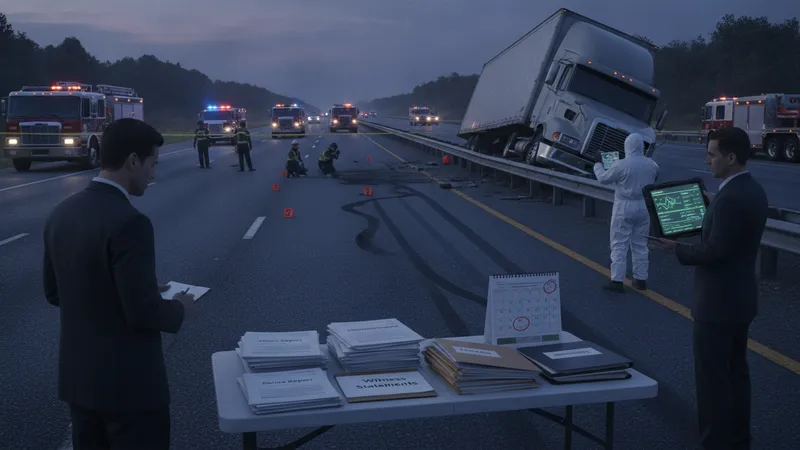
Accident documentation methods may influence how causation is established later in a claim or proceeding. Photographs that show skid marks, road signs, and vehicle damage can provide contemporaneous context. Police reports typically include officer observations and citations that can be relevant but are often considered one piece of the overall record. Medical records documenting injuries and treatment timelines may be used to support claims of harm. Maintaining chronological, dated records of communications and expenses related to the collision often helps construct a clear factual timeline for later review.
Evidence collection approaches typically require prompt action to preserve perishable data. Many commercial trucks use electronic logging devices and event data recorders that may store speed, braking, and steering inputs; these data sources may be overwritten after a period and therefore often need timely preservation requests. Maintenance records, driver qualification files, and cargo documentation may be held by carriers and can bear on questions about vehicle condition or driver training. Witness statements and contact information collected near the time of the incident often provide memory details that can later corroborate other evidence.
Insurance and liability process types can vary depending on policy terms and the identities of potential defendants. Commercial motor carriers often carry layers of coverage, including required liability policies and optional excess policies; third-party liability claims are generally submitted to the insurer of the party alleged to be responsible. Regulatory regimes and carrier safety ratings may inform aspects of a case, especially when compliance with hours-of-service rules or maintenance regulations is at issue. Understanding the types of coverage that may respond to a claim helps clarify the administrative path for loss resolution.
Timelines and procedural rules often affect how claims are pursued. Statutory filing periods, administrative notice requirements, and internal carrier claim-reporting rules can each place practical constraints on when evidence should be preserved and when claims should be formally presented. In many jurisdictions, failure to follow certain notice or preservation steps can complicate later recovery efforts, even if it does not automatically preclude a claim. The guide typically stresses the importance of timely documentation and awareness of local procedural timelines as part of effective case management.
In summary, Truck Crash Legal Guide: Understanding Your Rights After a Serious Collision provides a structured overview of the typical components that arise after a major truck collision: documentation, evidence preservation, insurance interactions, and procedural timelines. It explains how these elements may interact without prescribing specific actions for any individual situation. The next sections examine practical components and considerations in more detail.
Immediately following a serious collision, documentation and reporting are often the first steps that shape later legal and insurance processes. Typical actions documented in this phase include creation of a police report, recording of basic scene facts such as weather and road conditions, and collection of witness names and contact information. Photographs of vehicle positions, damage, skid marks, and road signage may be taken to preserve visual context. Medical evaluations and transport records created early may also form part of the factual record used to support injury claims or establish timing of harm.
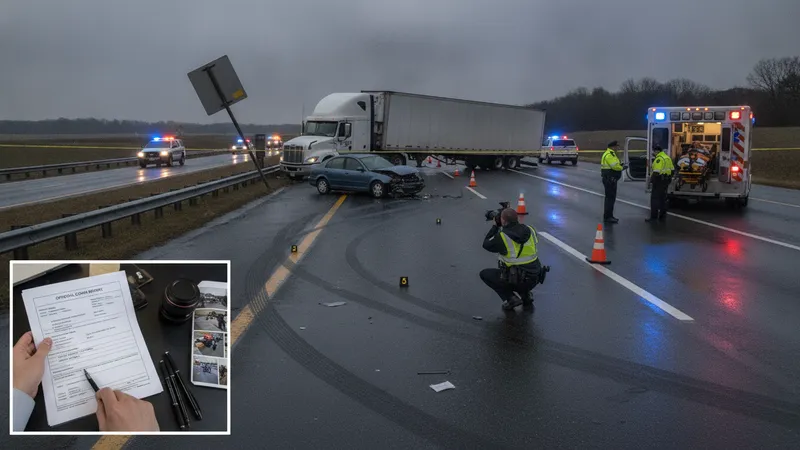
Scene safety and official reporting may proceed in parallel with evidence capture. Emergency responders and law enforcement commonly secure the scene, gather statements, and issue citations when appropriate; those official documents often become part of the administrative record. Contemporaneous private notes that record what occurred, who was present, and what was said can later assist in reconstructing events. Many jurisdictions maintain procedures for obtaining copies of police reports and collision records, which can be useful for subsequent administrative or legal processes.
Electronic sources captured at the scene may also require prompt attention. Mobile device photographs, dashcam footage, and bystander video may be stored by individuals and may become relevant to later inquiries; preserving copies and documenting when files were created may support the chain of custody. Commercial trucks frequently contain electronic logging devices or event data recorders that record vehicle speed, braking, and driver hours; these devices may have limited retention windows and therefore often need timely preservation steps to maintain the data for later analysis.
Practical considerations in the immediate phase often include documenting communications and expenses related to the collision. Logs of calls, towing invoices, rental vehicle costs, and early medical bills may be collected to substantiate loss and mitigate disputes about timing or extent of harm. While these records alone do not determine liability, they commonly form part of the factual mosaic used to evaluate claims. Understanding the typical administrative procedures for obtaining official records and preserving electronic data may reduce later evidentiary hurdles and support coherent case development.
Evidence collection and preservation encompass physical, documentary, and electronic materials that may be relevant to establishing what occurred and why. Physical evidence can include vehicle damage, roadway marks, and cargo condition. Documentary evidence often involves maintenance logs, driver qualification files, dispatch records, and insurance documentation. Electronic evidence may include event data recorder outputs, ELD logs, telematics records, and surveillance video. Preservation measures often entail creating copies, requesting preservation holds, and documenting custody to minimize the risk of data loss or alteration.
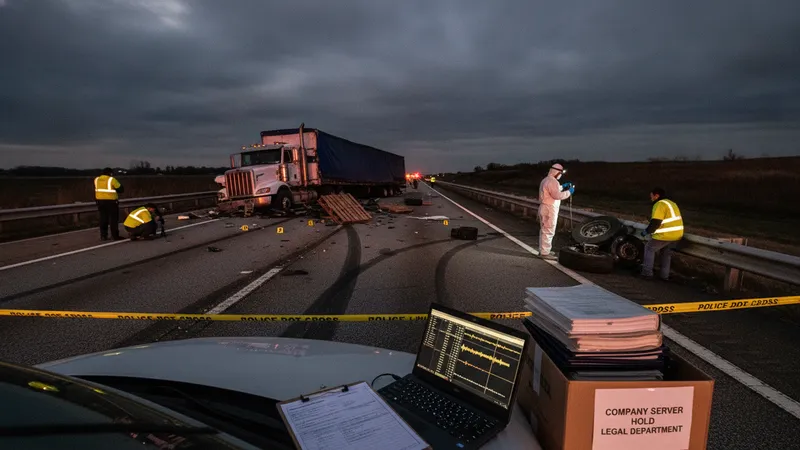
Chain-of-custody considerations are frequently important when evidence moves from the scene to analysis. Clear records of who handled a piece of evidence, when it was collected, and how it was stored may be necessary for the evidence to be admissible in later proceedings. Forensic analyses of vehicle systems, brake components, or electronic recorder output may require qualified examiners and established protocols. In many cases, experts in accident reconstruction or mechanical inspection are consulted to interpret technical data and to relate physical findings to potential causation scenarios.
Timing is often a critical factor in preservation. Some electronic logs and video recordings may be overwritten or deleted according to routine carrier or device policies, so filing preservation requests or notices can be an important step. Maintenance and inspection records may be changed or become less accessible over time; early requests for these records can reduce the risk of losing relevant documentation. Witness recollection generally fades with time, so obtaining preserved statements or contemporaneous notes may support later credibility assessments.
Practical evidence collection measures may also involve neutral third-party sources. Roadway design records, traffic signal logs, and commercial carrier inspection histories held by regulatory agencies can supplement private materials. Publicly available crash data and safety ratings maintained by regulatory bodies may contextualize carrier histories and safety performance. Considering a broad range of evidence sources and documenting preservation efforts typically helps maintain the factual foundation needed for subsequent administrative reviews or legal proceedings.
Insurance claims and liability assessments often proceed concurrently after a serious truck collision. Commercial carriers and their insurers typically investigate incidents to determine coverage applicability and fault. Various types of policies may be relevant, including primary liability coverage, excess or umbrella policies, and cargo insurance. The interaction among those policy layers often affects which insurer responds to a particular claim. Understanding the typical structure of commercial motor carrier insurance and the potential for multiple insurers to be involved can clarify administrative steps and expected timelines.
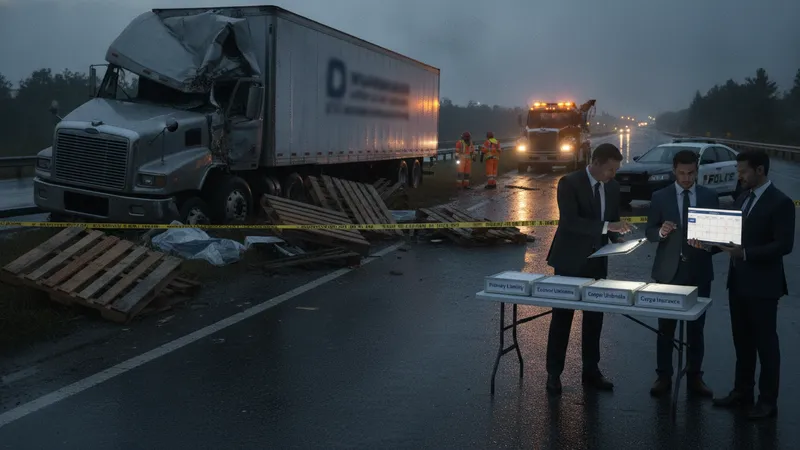
Liability considerations commonly involve analysis of driver conduct, vehicle maintenance, carrier compliance, and external factors such as road conditions. Legal theories that parties may assert include negligence, negligent hiring or retention, vicarious liability for employer actions, and equipment or maintenance-based claims. Comparative fault rules in many jurisdictions can affect recovery when multiple parties share responsibility; such rules typically reduce recovery proportionally rather than bar it outright in many systems. The presence of regulatory violations, such as hours-of-service breaches, can factor into liability assessments but do not automatically decide fault.
Insurance claim processes often begin with notice to the carrier and insurer, followed by an insurer investigation that may involve document requests, interviews, and assessments of damages. Carriers and insurers often seek to identify responsible parties and the applicable policy limits. Claim adjusters may review medical records, repair estimates, and loss documentation. Disputes over liability, compensable losses, or coverage scope are common and may be resolved through negotiation, alternative dispute resolution mechanisms, or formal proceedings depending on the jurisdiction and the parties’ positions.
Settlement frameworks typically address compensatory elements such as property damage, medical expenses, lost earnings, and certain non-economic losses where recognized by law. In many places, damage calculations may include present and future losses, and expert opinions on prognosis or economic impact can be part of the assessment. The presence of multiple insurers, jurisdictional rules on damages, and procedural timelines may each influence how and when a claim is resolved. Clear documentation and preservation of supporting materials often facilitate settlement discussions or evidentiary presentation if matters proceed further.
Legal procedures and filing deadlines vary by jurisdiction and commonly influence the choices available after a serious truck collision. Statutes of limitation set time limits for initiating civil actions and may range from months to several years depending on local law. Some administrative claims or notice-of-claim requirements must be satisfied before a lawsuit can proceed, particularly against public entities. Timely awareness of these procedural deadlines often shapes evidence preservation strategies and case planning, as missed deadlines can materially affect legal options.

Compensation frameworks typically categorize recoverable losses into economic and non-economic damages where permitted by law. Economic damages may include documented medical costs, rehabilitation expenses, and documented lost earnings; non-economic damages cover pain and suffering, loss of enjoyment of life, or other subjective harms where recognized. In fatal collision cases, many systems also provide for survivorship or wrongful death claims with distinct recovery categories. The availability and measure of these damages often depend on statutory rules and case law in the applicable jurisdiction.
Choices about dispute resolution commonly include negotiation, mediation, arbitration, or filing a lawsuit. Each path has procedural consequences: mediation may provide a structured negotiation process, arbitration can impose binding outcomes under agreed terms, and litigation engages formal court procedures including discovery, depositions, and hearings. The selection of a resolution path often reflects case complexity, parties’ willingness to negotiate, and jurisdictional practices. Consideration of procedural costs, timelines, and evidentiary requirements typically informs these choices.
Factors that may influence case outcomes include the clarity and preservation of evidence, regulatory compliance records of involved carriers, the severity and documentation of injuries, and the ability to establish a causal link between the collision and claimed losses. Expert analyses—such as accident reconstruction, medical causation, and economic loss calculations—can be important in contested matters. The guide aims to clarify these typical elements so readers can understand common procedural and evidentiary components that often arise in serious truck collision matters without prescribing a specific course of action.